Sustainable Exhibition Stands: Costs, Carbon and Resuse ROI
11 November 2025

design that delivers reduced environmental impact
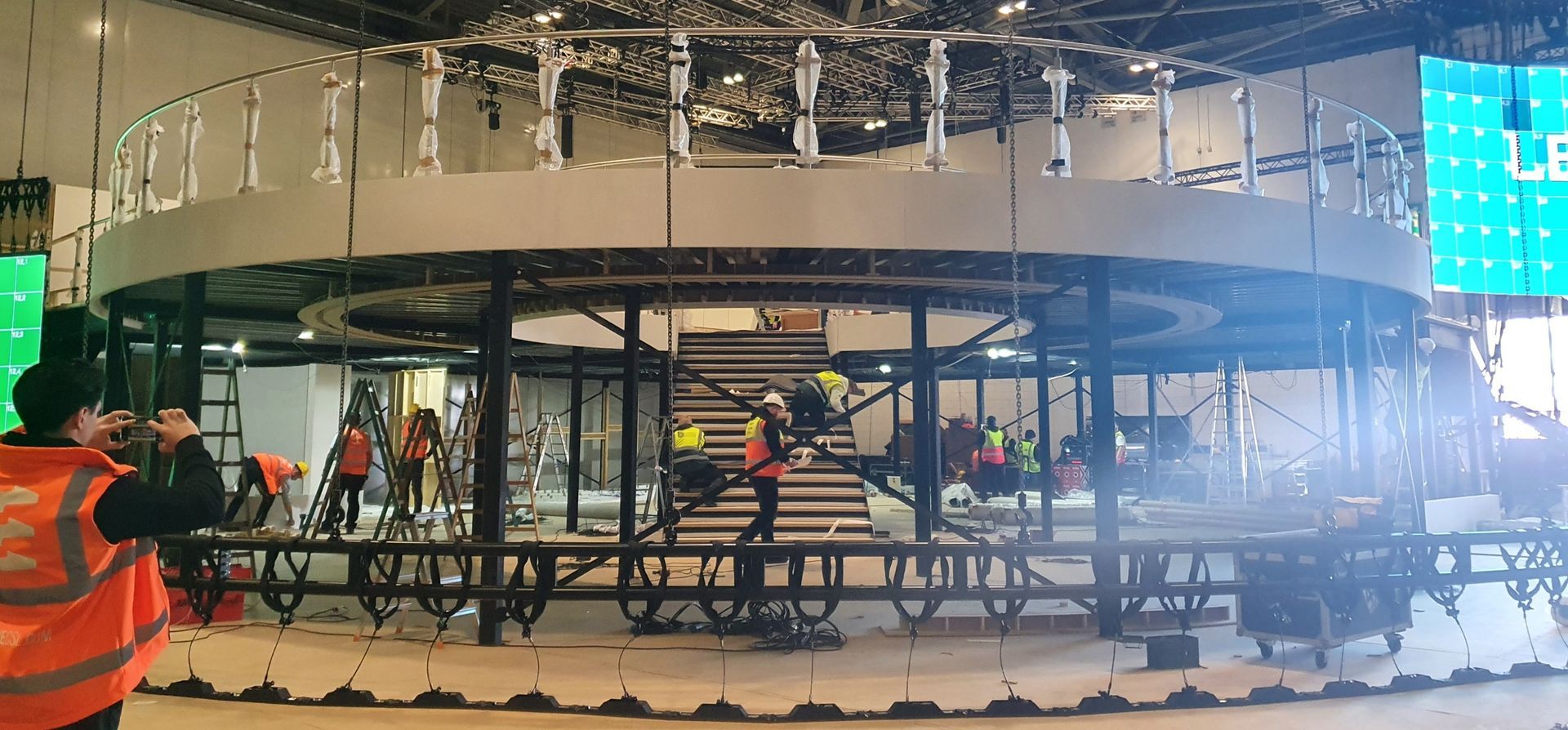
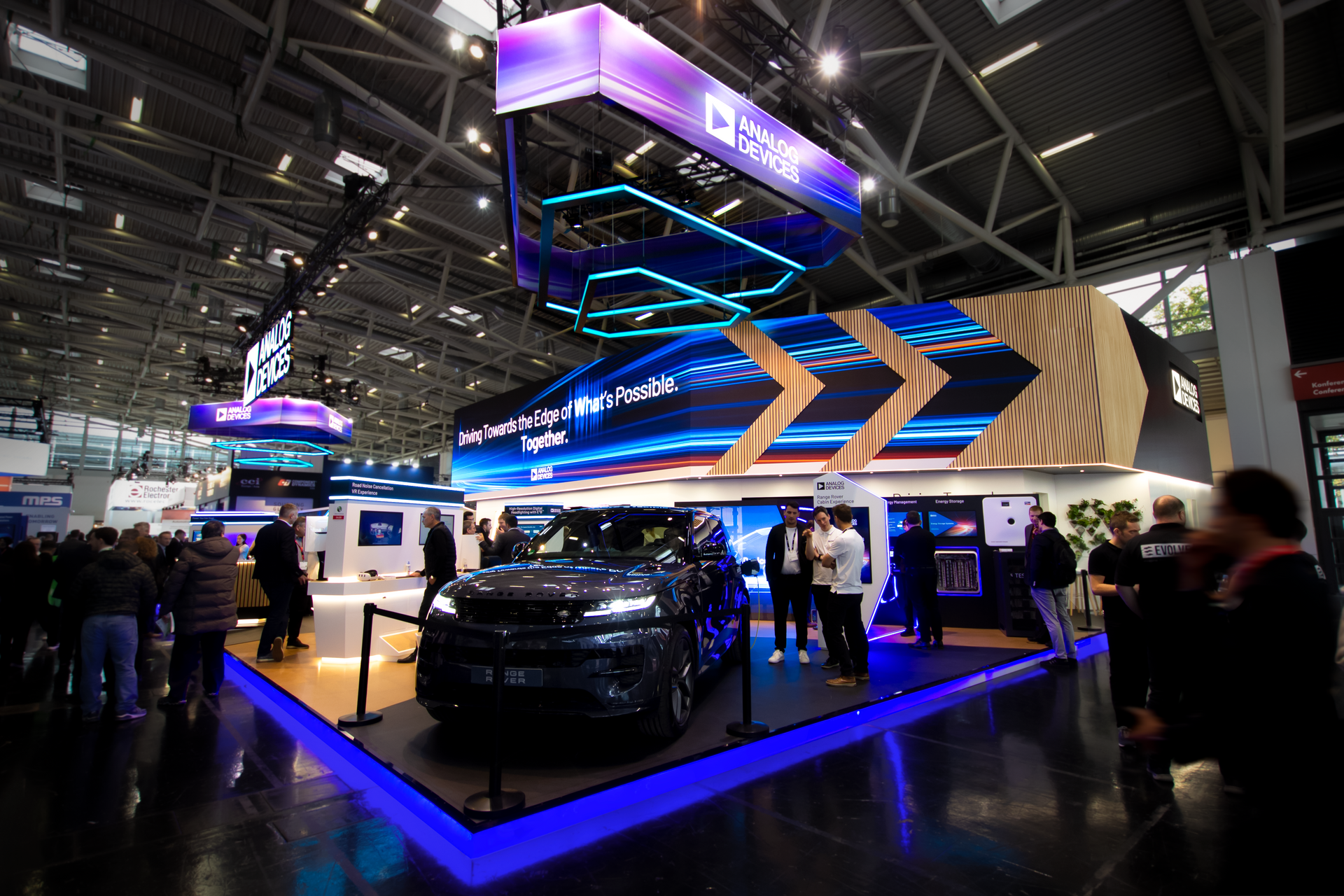
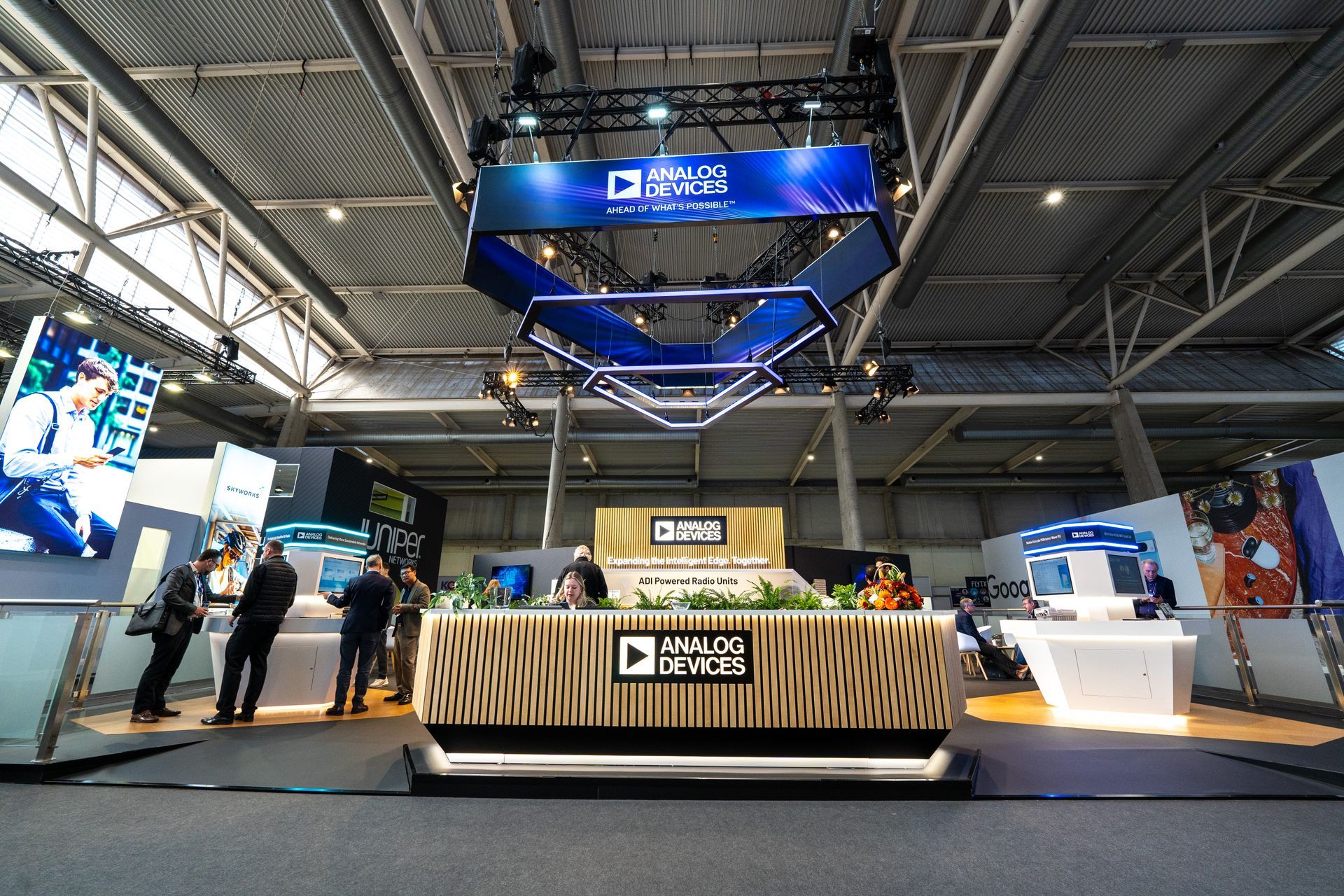
The Evolve team on-site at London's ExCel Centre rebuilding a steel framework double-deck for the second year running. All the parts were stored locally and re-used for subsequent years.
Sustainable Exhibition Stands: Cost, Carbon and Reuse ROI
The exhibition industry is changing. More brands are asking harder questions about the environmental impact of their trade show presence, and the answers are reshaping how we approach stand design and construction. Sustainable exhibition stands aren't just about ticking a compliance box anymore—they're about smart design that delivers genuine value alongside reduced environmental impact.

The Real Cost of Sustainable Exhibition Design
When clients first explore sustainable exhibition design, the conversation often starts with concerns about cost. It's a fair question. Sustainable materials and practices can carry different price points to traditional approaches, but the full picture is more nuanced than a simple comparison of upfront spend.

The genuine cost advantage of eco exhibition design emerges over time. A well-designed semi modular system can be reconfigured for multiple shows, spreading the initial investment across years rather than months. Materials chosen for durability and reusability mean less frequent replacement. And increasingly, venues and show organisers are offering incentives—better stand positions, reduced fees, or marketing support—for exhibitors who demonstrate environmental responsibility. The key is designing for longevity and adaptability from day one, not treating sustainability as an afterthought or add-on feature.

Carbon Impact: Where Exhibition Stands Really Make a Difference
Understanding carbon impact requires looking beyond the obvious. Yes, material choices matter enormously. But the biggest carbon wins in green event design often come from decisions about logistics, construction methods, and end-of-life planning.
  • Transport represents a substantial portion of an exhibition stand's carbon footprint. A 500 square metre stand at a major European show might generate as much carbon moving materials and equipment as it does in the actual construction. This is why intelligent design that minimises shipping volume and weight delivers real environmental benefits.
  • Local sourcing wherever possible, modular systems that pack efficiently, and digital elements that replace physical materials all contribute to lower carbon impact. At shows like MWC Barcelona or Electronica in Munich, working with suppliers who have local manufacturing and storage capabilities can cut transport-related emissions by 60% or more compared to shipping everything from a single location.
  • The construction phase itself offers significant opportunities for carbon reduction. Using mechanical fixing systems rather than adhesives means components can be fully disassembled and reused. LED lighting systems, now standard in high-impact stands, use a fraction of the energy of older technologies while delivering superior visual results. Even details like using digital displays instead of printed graphics can eliminate kilograms of waste per show.

The ROI of Reusability
Reusability transforms the economics of sustainable exhibition stands. When you design a stand that can evolve rather than being rebuilt from scratch for each show, you're creating an asset rather than an expense.

The most successful reusable systems share certain characteristics. They're built around a strong, distinctive brand identity that remains consistent even as specific elements change. The core structure is robust and adaptable, with flexible zones that can be reconfigured for different stand sizes or layouts. Technology integration points are designed in from the start, making it easy to update digital elements without touching the physical structure.

We worked with a technology sector client to create a modular stand system that's been deployed at over fifteen shows across Europe. The secret isn't just in the modularity - it's in thoughtful design that makes each iteration feel fresh. By swapping out graphics, reconfiguring meeting spaces, and updating digital content, the stand serves their needs at everything from intimate 50 square metre events to expansive 500 square metre flagship shows. Each time, it looks purposefully designed for that specific show, not like a recycled compromise.

Making the Business Case for Sustainable Exhibition Design
For event managers and marketing directors, the sustainability conversation needs to be grounded in business outcomes, not just environmental credentials. The strongest business cases connect green event design to three key areas: brand positioning, operational efficiency, and risk management.
  1. Brand positioning is increasingly tied to environmental responsibility. For B2B brands, particularly in technology and professional services sectors, demonstrating genuine commitment to sustainability influences purchasing decisions and partnership opportunities. A well-executed sustainable exhibition stand becomes a talking point, a demonstration of values in action rather than just words in a CSR report.
  2. Operational efficiency improves dramatically with sustainable systems. Less time spent on complete rebuilds means more time for refinement and optimisation. Familiarity with the system reduces set-up stress and last-minute problems. Project managers work with known quantities rather than starting from zero with each show, which directly addresses one of the key motivations for exhibition teams - avoiding stress and ensuring smooth execution.
  3. Risk management benefits from the proven reliability of reusable systems. When you've built and tested a structure multiple times, you know it works. Material specifications are established, logistics are streamlined, and potential issues have been identified and resolved. This reduces the risk of expensive on-site surprises and gives senior leadership confidence in the exhibition programme.

Sustainable Materials and Methods That Deliver Impact
The materials and construction methods used in sustainable exhibition stands have evolved significantly. Modern eco exhibition design doesn't require compromise on visual impact or build quality. In fact, some of the most spectacular stands we've created at Evolve have been among the most sustainable.

LED technology has become central to creating high-impact, energy-efficient exhibition spaces. A large-scale LED wall or mesh LED installation might use 60-70% less power than equivalent conventional lighting while delivering dramatically more impactful visuals. The synchronised LED arrays and lighting systems we integrate into stands draw attention and create immersive environments without the energy consumption of traditional exhibition lighting.

Digital displays replace printed materials, allowing content to be updated infinitely without generating physical waste. A strategic combination of permanent digital screens and temporary tablets or monitors means product information, case studies, and promotional content can change for each show - or even update during a show - without printing a single page.

Practical Steps Toward Sustainable Exhibition Stands
Moving toward sustainable exhibition design doesn't require a complete transformation overnight. The most successful transitions happen in stages, with each show building on lessons from the previous one.
  1. Start by auditing your current exhibition programme. Track what actually gets reused and what ends up as waste. Identify which elements are show-specific and which could be standardised across multiple events. This baseline helps identify the highest-impact areas for improvement.
  2. Design with a three-year view rather than a single-show focus. Even if budget constraints mean you can't implement a long-term commitment immediately, designing today's stand with future reusability in mind protects your investment. This might mean specifying mechanical fixings instead of permanent adhesives, choosing more durable finishes, or building in flexibility for future reconfiguration.
  3. Partner with exhibition contractors who take sustainability seriously. Look for ESSA accreditation and ISO environmental certifications, but also ask specific questions about their practices. How do they handle material waste? What percentage of stand components typically get reused? Do they have efficient logistics systems that minimise transport impact? The right partners make sustainable exhibition design easier, not harder.
  4. Set clear metrics and track progress. Whether it's percentage of materials reused, carbon per square metre, or total cost per show over time, having concrete numbers makes it easier to demonstrate value and identify opportunities for improvement. These metrics also provide the evidence needed to secure continued investment in sustainable approaches.

The Future of Sustainable Exhibition Design
The trajectory is clear. Venues are implementing stricter environmental requirements. Show organisers are favouring sustainable exhibitors. And increasingly, visitors and customers expect brands to demonstrate environmental responsibility through action, not just statements.

The most forward-thinking brands are viewing this not as a burden but as an opportunity. In a crowded exhibition hall, a beautifully designed sustainable stand that tells a compelling story about the brand's values creates differentiation. It gives sales teams something meaningful to discuss beyond product specifications. It demonstrates that the company thinks long-term and invests thoughtfully.

Green event design is no longer about making compromises between impact and environmental responsibility. Modern sustainable exhibition stands can be spectacular, memorable, and highly effective at achieving business objectives while dramatically reducing environmental impact and delivering better return on investment over time.

Whether you're planning your next exhibition presence or reviewing your entire trade show strategy, sustainable design approaches offer a path to stands that are better for your brand, better for your budget, and better for the planet. Contact us to continue the conversation.

Marketing Director speaks at Event Tech Summit
4 December 2025
Last week, our Marketing Director Elizabeth joined the panel at the Global Event Tech Summit to discuss "Tech for Exhibiting and Brand Activations: What actually works?". It was a valuable conversation that reinforced what we see every day at Evolve : the best exhibition experiences happen when technology serves the story, not the other way around. The Central Question Exhibition technology has never been more capable. LED walls are bigger, projection mapping is more sophisticated, interactive elements are more responsive. The question isn't what's technically possible anymore - it's what's purposeful. As Elizabeth shared on the panel: "Technology gives us incredible tools to engage audiences. But we need to create emotion and meaning, not just spectacle." What Actually Works The panel explored several themes that align closely with our approach to technology-led design : Invest in content, not just hardware: A huge LED wall is only as good as what you show on it. Professional-quality video content that tells your brand story will always create impact. Scale creates opportunity for awe, but only when the content matches the ambition. Cohesion over gadgets: The temptation is always to create a shopping list of the latest technologies. But what consistently works is cohesion - when screens, lighting, planting, and spatial design all pull together to tell one compelling brand narrative. Interactivity with purpose: Interactive elements are immediately engaging because humans naturally love to touch and move things. But unless they're clearly tied to your overarching brand message, they risk becoming gimmicky distractions rather than meaningful engagement tools. Creating Emotion, Not Just Noise: One of the most interesting discussion points was about sensory overload. Exhibition halls are loud, busy, overwhelming spaces. Adding more noise and movement doesn't automatically create engagement - sometimes it just creates fatigue. The stands that work create focused emotional moments. They use technology to amplify a clear message, not to compete for attention through sheer volume. Our Experience in Action At Evolve, we design with technology every day across major European venues. We've delivered everything from transparent LED meeting room walls that maintain connection to stand energy, to full 3D immersive video cubes that transport visitors into brand worlds. What our design team excels at is creating experiences where the technology, lighting, and spatial design serve a single cohesive story. The hardware is impressive, but it's purposeful - every element earns its place by contributing to the emotional impact we're trying to create. The Human Element The panel kept returning to one fundamental truth: humans are still humans. Exhibition technology continues to evolve, but human psychology doesn't. If you want people to remember something, you need to make them feel something. That's the work - not specifying the latest gadgets, but understanding how to use those tools to create meaningful emotional connections between brands and their audiences. It was energizing to be part of this conversation with other professionals who share our love of design and technology. Want to explore how technology-led design could work for your next exhibition? Get in touch to discuss your project.
The Telenor booth at MWC Barcelona
by Elizabeth Haworth 11 November 2025
Designing an exhibition stand that delivers results requires more than aesthetic appeal. The process from initial brief to finished build involves strategic decisions, technical expertise, and meticulous coordination. Get it right, and your stand becomes a powerful business tool. Get it wrong, and you've invested significant budget in something that fails to meet your objectives. Starting with Strategy: The Exhibition Brief If you want to know how to design an exhibition stand , then start with the brief. The brief sets the foundation for everything that follows. A strong brief doesn't just describe what you want the stand to look like - it articulates what you need it to achieve. Start with clear business objectives . Are you launching a new product? Meeting existing customers face-to-face? Establishing your position as a significant market player? Generating qualified leads? Each objective shapes design decisions in different ways. A stand focused on hosting high-value client meetings needs extensive private spaces and hospitality. A lead generation stand requires open, approachable areas and clear pathways that draw traffic through product zones. Know your audience intimately. In B2B exhibitions, you're typically targeting specific job roles, industries, or company sizes. Understanding what motivates them to stop, engage, and remember your brand informs everything from messaging hierarchy to spatial layout. Technical buyers need different experiences to C-suite decision-makers, and your stand design should accommodate these distinct needs. Budget and timeline realities shape what's possible. Be honest about both from the outset. Exhibition stand designers can create spectacular results across a wide range of budgets, but they need to know the real parameters. Similarly, timeline constraints—particularly for international shows with complex logistics—affect material choices, construction methods, and supplier selection. Space Planning and Flow The physical layout of your exhibition stand determines how effectively it serves your objectives. Even the most visually stunning design fails if people don't move through the space in ways that support your goals. Stand size and location influence every design decision. A 100 square metre island stand offers different opportunities to a 500 square metre space in a prime show location. Corner positions allow for different traffic flows to stands with one open side. Understanding these spatial dynamics from the start ensures the design works with, rather than against, the fundamentals of your location. Of course, you can't often choose exactly which location you can have at a show but at Evolve we are used to making the most of tricky locations and maximising the impact you can achieve. We can also advise, if you are weighing up alternative locations on a floorplan, on which we have seen deliver the best footfall. Create distinct zones that serve different purposes. A successful large stand typically includes product demonstration areas, meeting spaces, hospitality zones, and circulation paths that connect everything naturally. The key is making these zones feel like parts of a coherent whole, not disparate elements thrown together. This comes back to the Evolve principle of coherent design - everything should feel meaningfully connected even when different areas have distinct purposes. Traffic flow requires careful consideration. Where will people enter your stand? How do you guide them through key areas without creating bottlenecks or dead ends? What sightlines do you need to maintain from different approaches? These questions might seem mundane compared to discussions about dramatic lighting or spectacular LED walls, but they determine whether your stand actually functions well under the pressure of a busy show like MWC Barcelona or Farnborough Air Show . Visual Identity and Brand Expression Your exhibition stand is your brand brought to life in three dimensions. People form impressions within seconds of seeing it, and those first impressions shape everything that follows. Brand consistency matters enormously in exhibition design. Your stand should feel like an authentic expression of your brand, not a generic space with your logo applied. This means understanding and applying your brand codes - colours, typography, imagery style, tone - throughout the physical environment. But it also means thinking about how your brand values translate into spatial experience. Lighting forms an integral part of this brand expression, not an afterthought. The way a space is lit dramatically affects how people perceive it and interact within it. Strategic lighting can guide attention, create atmosphere, highlight products, and establish hierarchy. The dramatic impact of synchronised lighting arrays and LED walls isn't just about spectacle - it's about creating an environment that embodies your brand's energy and ambition. Graphics and messaging need hierarchy and restraint. The temptation in exhibition design is to say everything, everywhere. Resist it. Clear primary messages visible from distance, secondary information for people who've engaged, detailed content for those in conversation -this layering ensures your stand communicates effectively at every level of engagement without overwhelming visitors. Technical Infrastructure and Integration Modern exhibition stands increasingly rely on sophisticated technical systems. Planning for these from the outset is essential, not just for functionality but for achieving the seamless integration that characterises professional spaces. Power and data requirements need careful calculation. A stand with multiple LED screens, lighting systems, demonstration equipment, and charging points requires substantial infrastructure. Understanding these needs during design prevents expensive modifications during build or, worse, discovering on show day that you can't run all systems simultaneously. Audio-visual systems demand more than just specifying screens. How does content play across multiple displays? Who controls what, and from where? What happens if something fails during the show? Professional exhibition stand manufacturers think through these scenarios and build in redundancy and easy access for troubleshooting. Digital integration has become central to creating engaging exhibition experiences. From interactive product configurators to real-time data visualisations to social media walls, the technology you integrate shapes how visitors experience your brand. The key is ensuring technology serves your objectives rather than existing for its own sake. Every digital element should have a clear purpose in your visitor journey. Materials, Construction and Quality How a stand is built matters as much as how it's designed. Quality of finish directly impacts how visitors perceive your brand, while construction methods affect everything from sustainability to reusability to on-site efficiency. Material selection involves balancing aesthetics, durability, budget, and environmental impact. Modern exhibition design offers remarkable flexibility - from traditional timber-based construction to aluminium frameworks, from solid surfaces to fabric tension systems. Each approach has strengths for different applications, and experienced exhibition design companies guide you toward choices that serve your specific needs. Construction methods affect both appearance and practicality. Mechanical fixings allow for disassembly and reuse. Modular systems offer flexibility for different stand configurations. Premium finishes in high-traffic areas withstand the inevitable wear of busy shows. These details might not be visible in renders, but they're immediately apparent in the finished stand. Quality control throughout the build process ensures what you approved in designs actually materialises on the show floor. This means regular checks during fabrication, pre-builds to test fit and finish, and experienced project managers who catch and resolve issues before they become problems at the venue. Engaging Exhibition Stand Designers and Manufacturers The relationship between client, designer, and manufacturer shapes the entire process. Understanding how to work effectively with exhibition stand designers and manufacturers accelerates projects and improves outcomes. Briefing requires clarity without being prescriptive. Share your objectives, constraints, and preferences, but leave room for creative solutions you might not have imagined. The best exhibition design companies bring expertise and ideas that elevate your initial vision. Listen to their questions, they're usually highlighting considerations you'll need to address anyway. Timelines for exhibition projects are sometimes longer than you would expect. From initial brief to finished stand can take 12-16 weeks for a small project, and much longer for complex international builds. Major shows like MWC Barcelona or ICE often have stand submission deadlines months before the actual show. Starting early gives you better supplier choice and reduces the stress of compressed schedules. Review and approval processes need structure. Typically you'll see concepts, then developed designs with costings and technical specifications, then final drawings before fabrication begins. Each stage needs timely review and clear feedback. Decisions delayed at the concept phase compress time available for refinement, technical development, and quality fabrication. Project Management and Delivery Even the most brilliant design fails without excellent project management. The coordination required to deliver a complete exhibition stand on time and on budget is substantial, particularly for international shows. Logistics planning starts during design. How do materials get to the venue? What are the restrictions on delivery times? Are there customs considerations for international shows? How does everything move from loading dock to stand location? These unglamorous details determine whether installation proceeds smoothly or descends into chaos. At Evolve we manage some of the biggest and most complex stands in the industry and we coordinate the different teams on site (rigging, A/V, build etc) months in advance. On-site installation requires experienced teams who understand both the design intent and the practical realities of exhibition venues. Installers work within strict time windows, often building simultaneously with dozens of other contractors in a confined space. Coordination, efficiency, and problem-solving under pressure separate professional exhibition contractors from amateurs. Show support doesn't end when the doors open. From minor adjustments on day one to equipment issues during the show to end-of-show dismantling and logistics, professional support throughout the event period protects your investment and ensures your team can focus on engaging with visitors rather than managing facilities. Learning and Evolution Each exhibition provides insights that should inform future designs. What worked? What didn't? Where did visitors naturally gather? Which messages resonated? Which spaces went unused? Capturing these observations while they're fresh helps refine your approach for the next show. Evolution rather than revolution often serves brands best. Building on successful elements while addressing weaknesses creates stands that feel both familiar and fresh. This evolutionary approach also supports sustainability - core structures remain while graphics, messaging, and configuration adapt to each show's specific context. Working with exhibition design companies who understand your brand and objectives over time creates genuine partnership. They develop institutional knowledge about what works for your specific needs, anticipate challenges, and propose improvements based on accumulated experience across multiple shows. Creating Exhibition Stands That Deliver The process of designing an exhibition stand from brief to build involves dozens of decisions, multiple specialists, and careful coordination. But when done well, it creates a powerful business tool that generates leads, strengthens customer relationships, launches products, and establishes market position. Whether you're planning your first major exhibition presence or refining an established programme, understanding this process helps you work more effectively with designers, make better decisions, and achieve better results from your exhibition investment. Ready to start planning your next exhibition stand? Learn more about how we approach exhibition design and explore how strategic design delivers measurable business results.
by Elizabeth Haworth 11 November 2025
Standing out in a crowded marketplace takes more than clever advertising. Brand activation creates the memorable, immersive experiences that transform passive audiences into engaged brand advocates. But what exactly is brand activation in Marketing , and how do you measure its success? Understanding Brand Activation Brand activation is the process of bringing your brand to life through experiences that drive genuine consumer engagement and action. Unlike traditional advertising that broadcasts a message, brand activation invites your audience to interact with your brand in meaningful ways. Think of it as the difference between telling someone about a product and letting them experience it first-hand. Brand activation creates those touchpoints where people don't just see your brand - they feel it, interact with it, and remember it. At its core, brand activation aims to build deeper connections between your brand and your target audience. These experiences can take many forms, from immersive exhibition stands and pop-up events to interactive digital campaigns and experiential marketing stunts. What ties them together is the focus on participation rather than passive consumption. The Power of Immersive Brand Experiences At Evolve we find that the most effective brand activations create environments where your audience becomes part of the story. When you design an exhibition stand that invites exploration, or create a live event that sparks conversation, you're giving people something far more valuable than information - you're giving them an experience worth sharing. We've seen this firsthand across hundreds of projects. A well-executed brand activation doesn't just attract attention on the show floor. It generates buzz that extends far beyond the event itself, creating conversations that amplify your reach through social media, word of mouth, and lasting brand recall. The beauty of immersive brand experiences lies in their ability to communicate complex messages quickly. A visitor walking through a thoughtfully designed space can grasp your brand values, product benefits, and company vision in seconds - something that might take dozens of touchpoints through traditional marketing channels. Types of Brand Activation Brand activation takes many forms, each suited to different objectives and audiences: Experiential Marketing Events create memorable moments that people want to talk about. Product launches, pop-up experiences, and interactive demonstrations let audiences engage with your brand in unexpected ways. These events work particularly well when you want to generate excitement around a new offering or reposition your brand in the market. Exhibition and Trade Show Activations put your brand in front of highly targeted audiences. A spectacular exhibition stand does more than display products and host meetings - it creates an environment that draws visitors in, facilitates meaningful conversations, and leaves a lasting impression. The key is designing spaces that balance visual impact with functional flow, ensuring every visitor has a chance to engage with your key messages. Sampling and Product Demonstrations remove the barrier between curiosity and commitment. When people can try before they buy, they develop confidence in your offering. This works especially well for products where the experience speaks louder than any marketing message could. Digital and Social Media Activations extend your brand's reach beyond physical spaces. Interactive campaigns, user-generated content initiatives, and immersive digital experiences can create engagement at scale. The most successful digital activations feel personal and interactive, not like another advertisement in a crowded feed. Retail and Point-of-Sale Activations capture attention at the crucial moment when purchase decisions happen. Strategic displays, interactive elements, and memorable in-store experiences can dramatically influence consumer behaviour and build brand loyalty. Real-World Brand Activation Examples The most successful brand activations share common traits: they're bold, they're focused, and they create genuine value for participants. Consider a technology company launching a new product at a major trade show like MWC Barcelona or Electronica . Rather than a traditional booth displaying specs and features, they create an immersive journey that lets visitors experience the technology in action. Dynamic LED walls demonstrate real-world applications, interactive zones let people test the product themselves, and knowledgeable staff facilitate conversations rather than deliver sales pitches. The result isn't just awareness - it's understanding and enthusiasm that translates into business results. Or think about a gaming company at a consumer show like Gamescom . They transform their exhibition space into an actual gaming arena, complete with tournament-style seating, live gameplay on massive screens, and opportunities for visitors to compete. The space buzzes with energy, drawing crowds and creating an atmosphere that perfectly captures the brand's spirit. Visitors don't just learn about the games - they become part of the gaming community. These examples work because they go beyond showcasing products. Evolve creates environments where brand values come alive and where visitors have genuine experiences worth remembering and sharing. Key Performance Indicators for Brand Activation Measuring the success of brand activation requires looking beyond simple attendance numbers. The most valuable metrics capture both immediate impact and longer-term brand benefits. Engagement Metrics reveal how well your activation resonates with your audience. Time spent in your space, interaction rates with different elements, and the depth of conversations all indicate whether you're creating meaningful connections. At exhibitions, we track how many visitors move beyond casual browsing to genuine engagement with products or staff. Lead Generation and Quality matter enormously for B2B brand activations. It's not just about collecting business cards - it's about identifying genuinely interested prospects and starting conversations that lead to business opportunities. Quality trumps quantity every time. Social Media Reach and Sentiment show how your activation extends beyond the immediate audience. When visitors share their experiences, post photos, or tag your brand, they amplify your message to their networks. Monitor both the volume of mentions and the tone of the conversation to gauge true impact. Brand Awareness and Recall measure lasting impact. Post-event surveys can reveal whether your activation increased brand recognition and how well key messages landed with your target audience. The goal is creating memories that persist long after the event ends. Sales Impact provides concrete validation of your brand activation's effectiveness. Track both immediate conversions during the event and the pipeline of opportunities generated. For longer sales cycles, monitor how leads from your activation progress compared to other sources. Return on Investment ultimately determines whether your brand activation delivered value. Calculate the total cost of your activation against the measurable business outcomes - leads generated, sales closed, brand value created. This helps refine your approach for future activations and demonstrates the tangible value of experiential marketing. Making Brand Activation Work for Your Business Successful brand activation starts with clarity about what you want to achieve. Are you launching a new product? Building awareness in a new market? Reinforcing your position as an industry leader? Your objectives shape every decision about format, scale, and execution. Understanding your audience is equally crucial. What motivates them? What experiences will resonate? What will make them want to engage rather than walk past? The best brand activations feel tailored to their audience because they are. The execution matters enormously. Every detail - from the initial concept to the materials, lighting, staff training, and follow-up - contributes to the overall experience. This is where Evolve 's expertise in design, build, and project management becomes essential. Creating truly immersive brand experiences requires technical skill, creative vision, and meticulous attention to detail. Creating Memorable Brand Experiences Brand activation offers something that traditional marketing can't match: the opportunity to create genuine, memorable connections with your audience. When done well, these experiences don't just generate leads or boost awareness - they transform how people perceive and relate to your brand. The exhibition landscape continues to evolve, with new technologies and changing audience expectations creating fresh opportunities for innovation. But the fundamental principle remains constant: people remember experiences, not advertisements. They connect with brands that offer them something meaningful, whether that's excitement, insight, entertainment, or simply a moment worth sharing. Whether you're planning your first brand activation or looking to elevate your exhibition presence, the key is creating experiences that are authentic to your brand and valuable to your audience. Get that balance right, and brand activation becomes one of your most powerful marketing tools. Ready to create a brand activation that delivers real results? We specialise in designing and building immersive exhibition spaces and brand experiences that make an impact. Get in touch to discuss how we can bring your brand to life.
ESSA Event Supplier & Services Association sustainability accreditation badge: purple and green circle with text and checkmarks.
31 October 2025
We are really pleased to share that we've been awarded ESSA Level 4 Sustainability Accreditation. What is ESSA Accreditation? ESSA's Sustainability Accreditation is an independent assessment that looks at how companies actually handle sustainability, not just what they say they do. It covers 12 different areas including energy management, waste reduction, carbon footprinting, sustainable procurement, equality and diversity, and community support. The scoring is pretty straightforward: you submit evidence of what you're doing, independent evaluators assess it, and you get a score out of 100. There are six levels in total, and we've scored 87 to hit Level 4, which covers scores between 70-89 points. Level 5 is the top tier and starts at 90 points, so we're getting close, which gives us something clear to aim for next time round. Why It Matters to Us There's a lot of greenwashing out there, and we wanted third-party verification of our sustainability efforts because saying you care about the environment is easy, but proving it is a different thing entirely. The ESSA framework aligns with ISO standards and requires proper documentation and evidence, which means you can't just talk a good game. Going through this process has made us look properly at what we're doing well and where we genuinely need to improve, and that clarity has been really valuable for us as a team. We're a small design agency, which means everyone plays a part in how we operate day-to-day, and getting this external perspective has helped us focus our efforts where they matter most. How We Got Here Our Head of Process and Compliance, Elizabeth Leese, has led the charge on getting our sustainability practices properly embedded and documented across the business. Her work has been essential in achieving this accreditation, and we're grateful for the dedication she's brought to it. The assessment covered everything from our energy use and waste management to how we source materials, support our community, and ensure equality across our work. Each area needed concrete evidence, not just promises or plans, but actual proof of what we're doing. It's been a thorough process, but that's exactly why the accreditation carries weight. What Happens Next The accreditation is annual, which means we'll be reassessed each year, and that's actually helpful because it keeps us accountable and gives us regular checkpoints to measure our improvement over time. Scoring 87 means we're three points off Level 5, and while we're not obsessing over the number, it does give us a clear target to work towards and helps us prioritize where to focus our energy. We're proud of what we've achieved so far, but we also know that sustainability isn't a destination. It's ongoing work that requires constant attention and improvement. This accreditation gives us a solid framework to keep building on, year after year, and we're committed to making continued progress as we go forward.
by Elizabeth Haworth 10 September 2025
Berlin this weekend saw global leaders like Samsung, Hisense, Haier, Miele, Siemens and more showcase their latest technologies alongside thousands of global manufacturers eager to connect with European distributors and consumers. With 220,000 visitors from 140 countries, IFA is a dazzling, and at times overwhelming, blend of B2B and B2C showcase, plus (somewhat inexplicably) rock concerts in the Sommergarten at the heart of the Messe. Compared to Gamescom or MWC, the Berlin Messe feels five times bigger and harder to navigate - but worth every aching step for the scale and diversity on display. From a 3D brand experience perspective, here’s what stood out: Themes – AI augmentation and robotics everywhere, from ovens to vacuum cleaners, often with striking similarity across halls. Which begs the question: how do brands stand out in a sea of robo-vacs and smart fridges? Brand environments – Memorable spaces cut through the noise. The AEG walk-through giant dishwasher LED cube was a showstopper, as were live cooking demos where smell, taste and energy drew crowds. LG’s appliance orchestra provided spectacle, even if the rest of their space was a bit austere. Entry portals – Framed entrances created powerful first impressions. Miele’s double-height video walls with inset dark mirrors felt like an entry point into a mystical world, while ASKO’s offset LED cube inside Hisense teased discovery. Even the lower-budget mirror frames at Vestel, proved the principle works at every scale. Best in show – AEG’s space in Hall 4.1: warm, bright, easy to navigate, full of interaction points. A masterclass in inviting visitors to linger. Electrolux brought a chic minimalist calm, while Bosch and Siemens went bold with brand guidelines at full throttle. At every level, one truth emerged: lighting is everything. It shapes atmosphere more than any other factor, influencing whether people walk past… or lean in. The most engaging brand experiences appealed to all the senses: sights, sounds, smells, tastes. It may take me a week to recover, but it was more than worth it. Respect to the sales teams working long, hot days, often in at least five languages, balancing both consumer and business conversations. 👉 I’d love to hear from others who walked the halls: Which stands or activations did you find most effective in cutting through the noise?
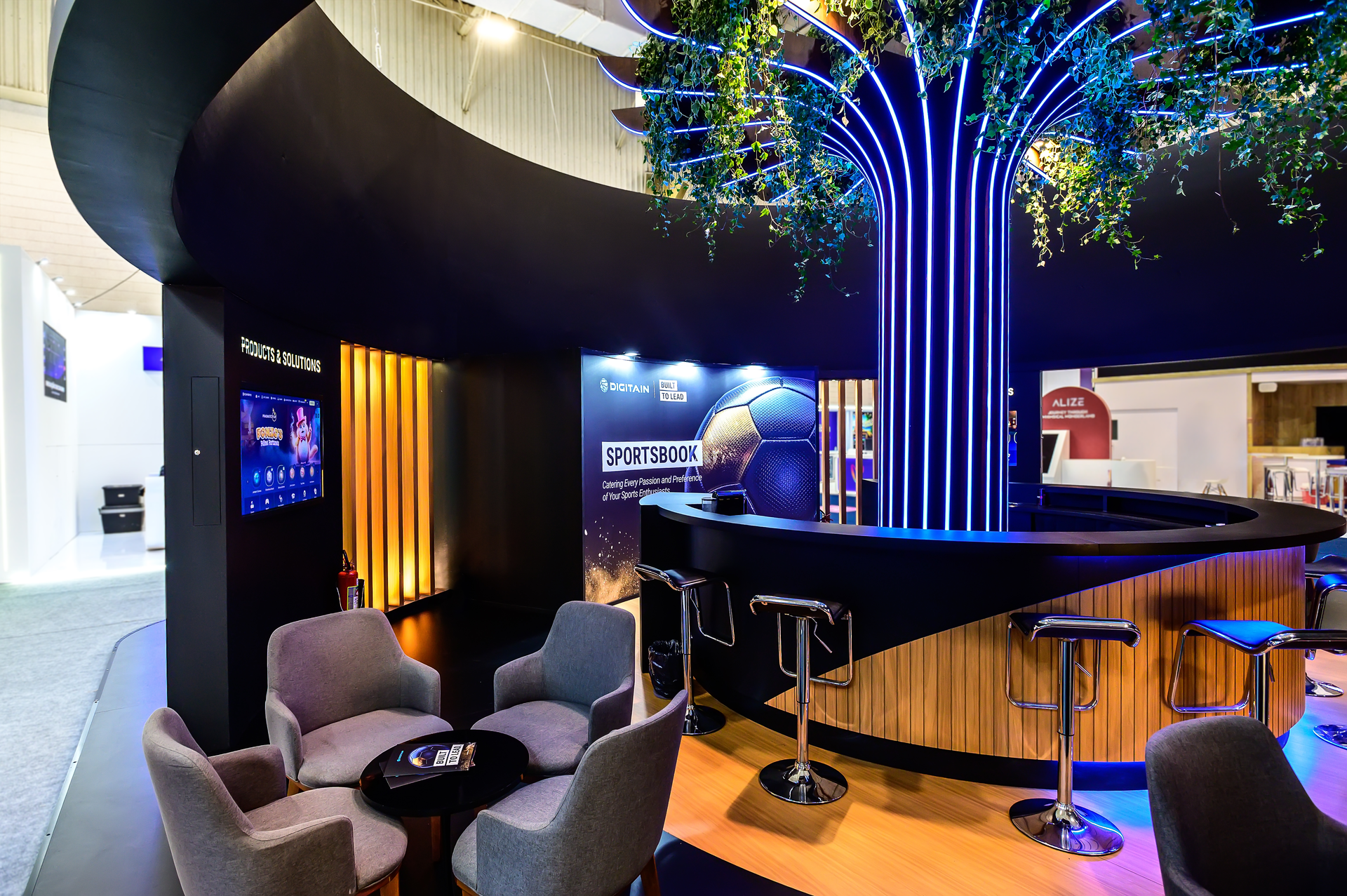
Bar area with seating, illuminated tree feature, and curved black and wood design.
by Elizabeth Haworth 22 April 2025
Last week, São Paulo played host to SiGMA Americas 2025 – one of the biggest events on the iGaming calendar – and Evolve Creative Solutions Ltd was right at the heart of the action. We’re proud to have designed and built two high-impact exhibition stands that stood out on the busy show floor and brought our clients’ brands to life in bold, memorable ways. Two stands. Two unique brands. One shared goal: impact. Our first build was for a major international sportsbook and igaming operator. The brief was clear: create a space that draws attention and drives conversation. The result? A sophisticated, circular structure with clean lines, vibrant lighting, and a VIP bar area with a central LED tree sculpture that perfectly brought the brand to life. Every detail was considered, from flooring and illuminated signage to strategically placed screens showing product demos. The feedback from the client – and their visitors – was overwhelmingly positive, with strong lead generation and nonstop foot traffic across all three days. The second stand we delivered took a different approach with a high impact design that commanded attention from across the hall. The height and space of the tunnel design allowed us to profile all the brand-new slot game releases - packed with thrilling features, stunning visuals, and next-level gameplay. The stand buzzed with energy as the client was able to showcase their award-winning games and latest releases. High-gloss finishes, layered textures, and integrated tech gave the stand a premium feel, while touchscreen displays kept visitors engaged. We also built in clever storage and flexible seating, making it easy for the client’s team to host meetings, give product walk-throughs, and manage high volumes of traffic without ever feeling cramped. Why it worked At Evolve CSL, we don’t just build exhibitions stands – we create brand spaces that work hard. These two projects in São Paulo are a perfect example of that. They were designed to reflect the identity of each brand, tailored to their objectives for the show, and engineered for function and flow. We also handled everything end-to-end: from concept and visualisation to logistics and on-site install. Our team was on the ground to make sure everything ran smoothly, and we delivered both stands on time, on budget, and without compromise. What’s next? With SiGMA Americas behind us, we’re already moving onto the next wave of booth design projects across Europe and the US. Whether it’s a 150sqm booth or a 5000sqm build, we bring the same focus: clarity of concept, precision in execution, and real value for every client. If you’re exhibiting at an upcoming event and want a stand that stands out, let’s talk.
Winner Most Creative Production logo
by Elizabeth Haworth 25 February 2025
We are thrilled to announce that one of our fantastic design team has been nominated as a Rising Star in the CN Agency Awards 2025. Since joining Evolve Creative Solutions in August 2022, Josh has rapidly proven himself as a designer with exceptional talent, ambition, and versatility. With a background in Product Design and a passion for creating immersive spaces, Josh has already made an extraordinary impact in his early career, shaping some of Evolve’s most high-profile projects and redefining the possibilities of exhibition design. Bold Creativity and Design Excellence Creativity is everything at Evolve and Josh’s hallmark is his bold, creative vision. He thrives on taking ambitious client briefs and transforming them into striking, memorable concepts. He has also been a core member of team working on the first ICE show In Barcelona, exemplifying his ability to work on expansive, complex designs with flair and precision. Client-Focused and Collaborative Leadership At Evolve we give clients immediate contact with the design and project management team who are working on their account. Josh’s exceptional communication skills make him a trusted liaison for clients and contractors alike. He is confident and professional in client-facing meetings, ensuring stakeholders are informed and reassured throughout every stage of a project. Josh also played a pivotal role in the redesign of Evolve’s own offices. He co-designed and project-managed the renovation, transforming the space into a welcoming, functional environment complete with a boardroom, kitchen, breakout room, and dedicated client areas. This upgrade has since enabled Evolve to host more client visits, strengthening relationships and enhancing the agency’s professional image. A Bright Future Josh Longman’s journey from junior designer to indispensable team member exemplifies the talent, dedication, and innovation celebrated by the Rising Star Award. Whether leading ambitious projects, winning major pitches, or bringing bold ideas to life, Josh has already made a significant mark on Evolve and the wider industry. His potential is limitless, and his future in the events industry is undoubtedly bright.
Winner Most Creative Production logo
by Elizabeth Haworth 10 December 2024
Evolve is proud to announce that we have won the prestigious Most Creative Production award at the Access All Areas Awards 2024! This accolade celebrates exceptional creativity and innovation in event production, and we are honoured to have our work recognised. Our winning project, the THQ Nordic booth at Gamescom 2024, was a triumph of imagination and craftsmanship. Designed to showcase seven incredible games, the booth featured immersive zones that transported attendees into unique gaming worlds. From the grandeur of castle-themed entrances to the intricate details of authentic mine shafts, every element was designed to inspire and engage. This project would not have been possible without the visionary collaboration of THQ Nordic. Their trust allowed us to push boundaries and deliver an ambitious, one-of-a-kind experience. At Evolve, we pride ourselves on delivering bold, innovative designs that captivate audiences and create lasting impressions. Winning this award reinforces our commitment to creativity and sets a high standard for future projects. Discover more about this award-winning project here: Gamescom 2024 Booth Design
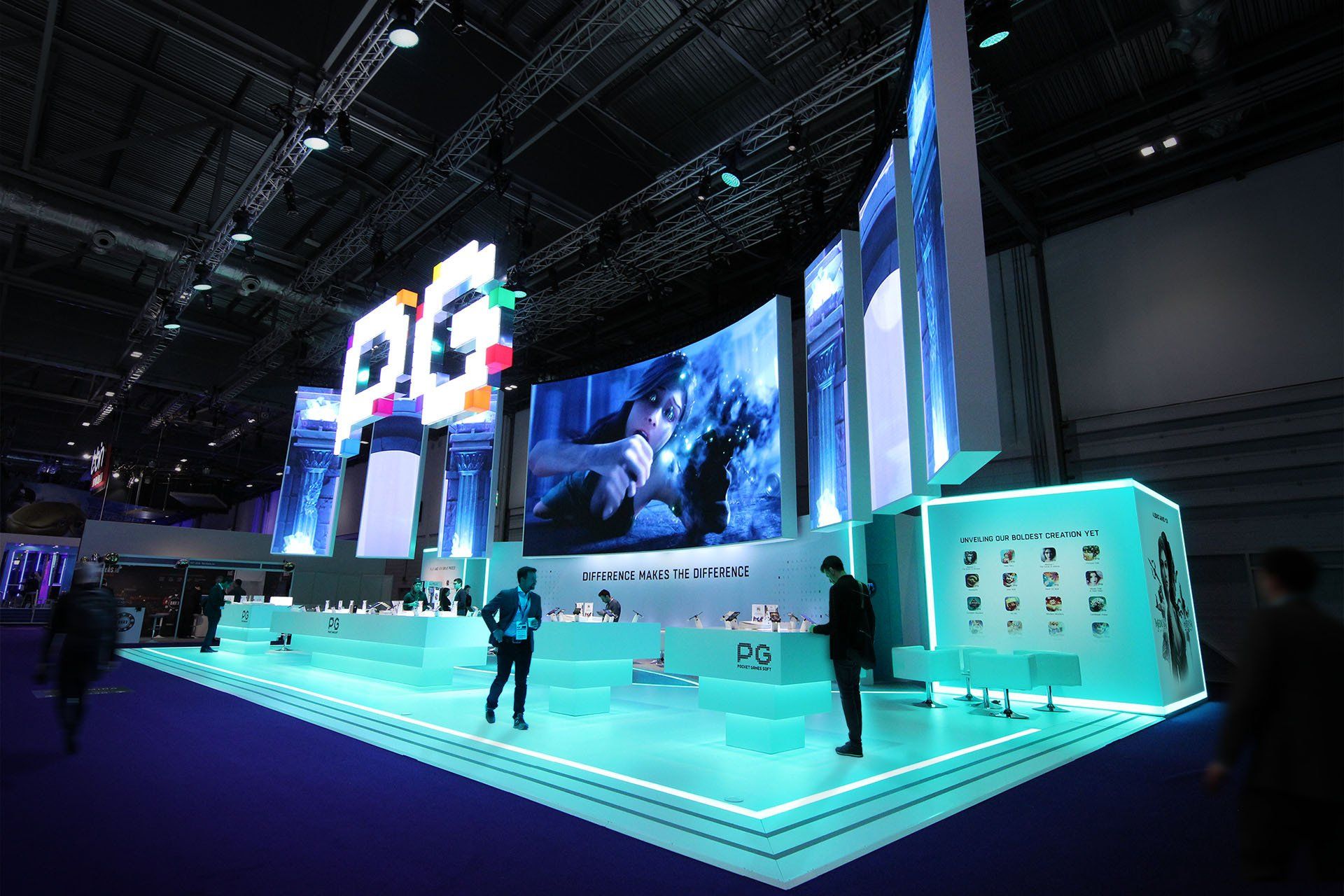
PG Soft booth at ICE London
by Elizabeth Haworth 8 October 2024
Investing in a large, visually impactful exhibition stand is a significant commitment, but how can you ensure it delivers a solid return on investment (ROI)? Measuring success goes beyond simply counting visitors. It’s about understanding engagement, quality of leads, and brand impact. Here are some key strategies to evaluate the ROI of your large exhibition stand. 1. Track Visitor Numbers and Engagement While foot traffic is an important indicator, quality matters more than quantity. Use visitor tracking technology, such as sensors or RFID, to monitor how long attendees spend in specific areas of your stand. Heat maps can help identify high-traffic zones, enabling you to understand which parts of your stand are attracting the most attention. 2. Lead Generation and Conversion A large stand should be optimized to capture qualified leads. Measure how many visitors leave their contact details or engage in meaningful conversations with your team. Keep track of how many of these leads convert into actual clients post-event to determine the effectiveness of your sales strategy on the stand. 3. Interaction with Key Features Whether you have product demonstrations, interactive displays, or hospitality areas, monitor how visitors engage with these features. This helps you assess whether your stand's design and layout are working to drive visitor interaction and engagement. 4. Post-Event Feedback Don’t forget to collect feedback from both your team and visitors. Survey visitors to get a sense of their experience, and review insights from your staff to identify what worked and what didn’t. This data can guide improvements for future exhibitions. By using these metrics, you can better measure the effectiveness of your large exhibition stand, ensuring you not only attract attention but also maximize your ROI.
Feature ceiling light on the Evolution booth at ICE
by Elizabeth Haworth 3 October 2024
In the competitive world of exhibitions, making your stand memorable often comes down to the finer details. One of the most important elements to consider is lighting. A beautiful stand with poor lighting will be off-putting for visitors and create a low impact on the show floor. Well-designed lighting not only draws attention but also helps create the right atmosphere and guides the flow of visitor interaction. Here’s why lighting deserves special attention in your next exhibition stand design. 1. Enhancing Visual Appeal Strategic lighting makes your stand pop, ensuring it stands out from across the exhibition hall. Whether it’s spotlighting your product displays or using soft ambient lighting to create a welcoming space, lighting can highlight key areas and increase the overall visual impact of your booth. 2. Setting the Mood Lighting plays a crucial role in setting the tone of your space. Warm lighting can create a relaxed, inviting atmosphere, ideal for networking or hospitality areas. On the other hand, cool, crisp lighting can create a high-tech, modern feel—perfect for showcasing cutting-edge products or technology. 3. Guiding Visitor Experience Properly placed lights can subtly guide visitors through your stand, helping you manage foot traffic and emphasize areas like product displays, meeting spaces, or interactive zones. It can also direct attention to specific focal points, making sure your key messages are seen. By incorporating dynamic lighting into your exhibition stand, you not only elevate your brand presence but also create an engaging and memorable experience for visitors.