Interactive Exhibition Design: Tech to Try This Year
13 January 2026

Interactive experiences at exhibitions
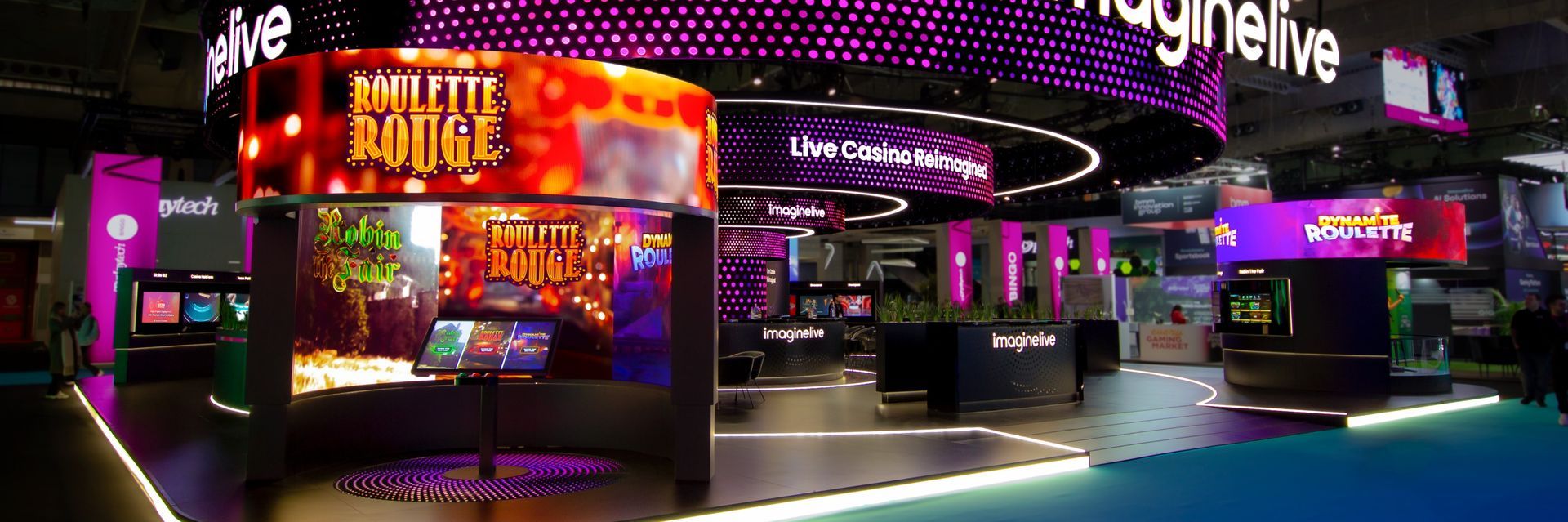
An interactive product demonstration on a stand at Barcelona's Fira Gran Via.

The best measure of whether interactive exhibition design is working is a simple one: are people stopping? Not glancing as they pass, but genuinely stopping, engaging, and staying long enough for a conversation to start. In a busy show hall where every stand is competing for the same finite pool of visitor attention, the stands that generate that kind of footfall are almost always the ones where something is happening - where there is something to do, to see, to experience, that cannot be replicated on a website or in a brochure.

Interactive exhibition design has matured considerably. The question is no longer whether to incorporate interactive elements, but which technologies deliver genuine value for your specific objectives and audience, and how to integrate them in ways that serve the brand rather than distract from it.


Technology in Service of the Story

The most important principle in interactive exhibition design is also the most frequently ignored: technology should serve the brand story, not replace it.

An interactive installation that generates a crowd but has no meaningful connection to what the company does is a missed opportunity. Visitors remember the experience, but they do not necessarily remember the brand behind it, or understand what the brand is for. The interactive element has consumed budget and floor space that could have been doing real commercial work.

The installations that perform best, in terms of engagement quality, lead generation, and brand recall, are the ones where the interactivity is inseparable from the brand message. Where what you do and how you do it are demonstrated through the experience itself, not described on a panel beside it.

This is the discipline that distinguishes genuinely effective interactive exhibition design from novelty. It requires the same strategic thinking as any other part of the stand brief, and it needs to be resolved at the concept stage, not retrofitted into a design that has already been agreed.


Technologies That Deliver in Practice

Several interactive technologies have reached a level of maturity and reliability that makes them dependable investments for exhibition environments.


Large-format touchscreens are the most widely used and, when properly deployed, one of the most effective. A 55-inch or 75-inch touchscreen presenting an interactive product catalogue or brand story allows visitors to explore at their own pace, following their own interests rather than a linear presentation. The interaction feels intuitive and requires no instruction. The data generated, such as which products attracted attention, which specifications were explored and how long visitors engaged, qualifies leads in ways that a conversation alone cannot. The key is content quality: touchscreen content needs to be developed specifically for the format and resolution, not adapted from a PowerPoint deck.


Interactive product configurators are particularly valuable for companies with complex or highly customisable products. A visitor who has spent ten minutes building their ideal configuration and seen it visualised has done a significant portion of the sales qualification process themselves. They know what they want, and the data captured tells the sales team exactly what that is before the follow-up call is made.

Gesture-controlled and sensor-based displays have moved well beyond novelty into genuine utility. The ability for multiple visitors to interact simultaneously without touching a surface has obvious practical advantages in busy show environments. More importantly, gesture-controlled content that draws a crowd creates social proof: other visitors see that something interesting is happening and come to investigate. When the content behind the gesture control is substantive and brand-connected, the crowd moment becomes a lead generation moment.


Augmented reality has become a practical solution for a specific and common exhibition challenge: demonstrating products that cannot be physically present at the show. Heavy machinery, large-scale installations, products still in development - AR allows visitors to see these at full scale, in context, with a level of detail that renders and photography cannot match. The technology has moved well beyond the experimental phase; major industrial and technology companies use it routinely at shows where bringing the actual product would be impossible.


The Gaming and Entertainment Sector: Where Interactive Design Sets the Pace

No sector pushes interactive exhibition design further or faster than gaming and entertainment. The audiences at shows like ICE and Gamescom are not passive observers of technology -- they are active, demanding users of it, and their expectations of what an exhibition stand should deliver are correspondingly high.


At ICE in Barcelona’s Fira Gran Via, Evolve designed and built the Novomatic stand around an experience that worked at multiple levels simultaneously. At the heart of the stand was a 480 square metre double-deck structure, with a casino showroom and suite of executive meeting rooms above. The public face of the stand was built for engagement: product demonstrations, playable content, and a visual presence that created impact from across the hall. The transition into the private upper level - the boardroom, the professional kitchen, the panoramic view across the show floor through a 9 x 4 metre transparent mesh LED panel - was the reward for the relationship that had been built in the public space below. Interactive exhibition design here was not a single installation but an entire spatial experience, calibrated from first impression to VIP hospitality.


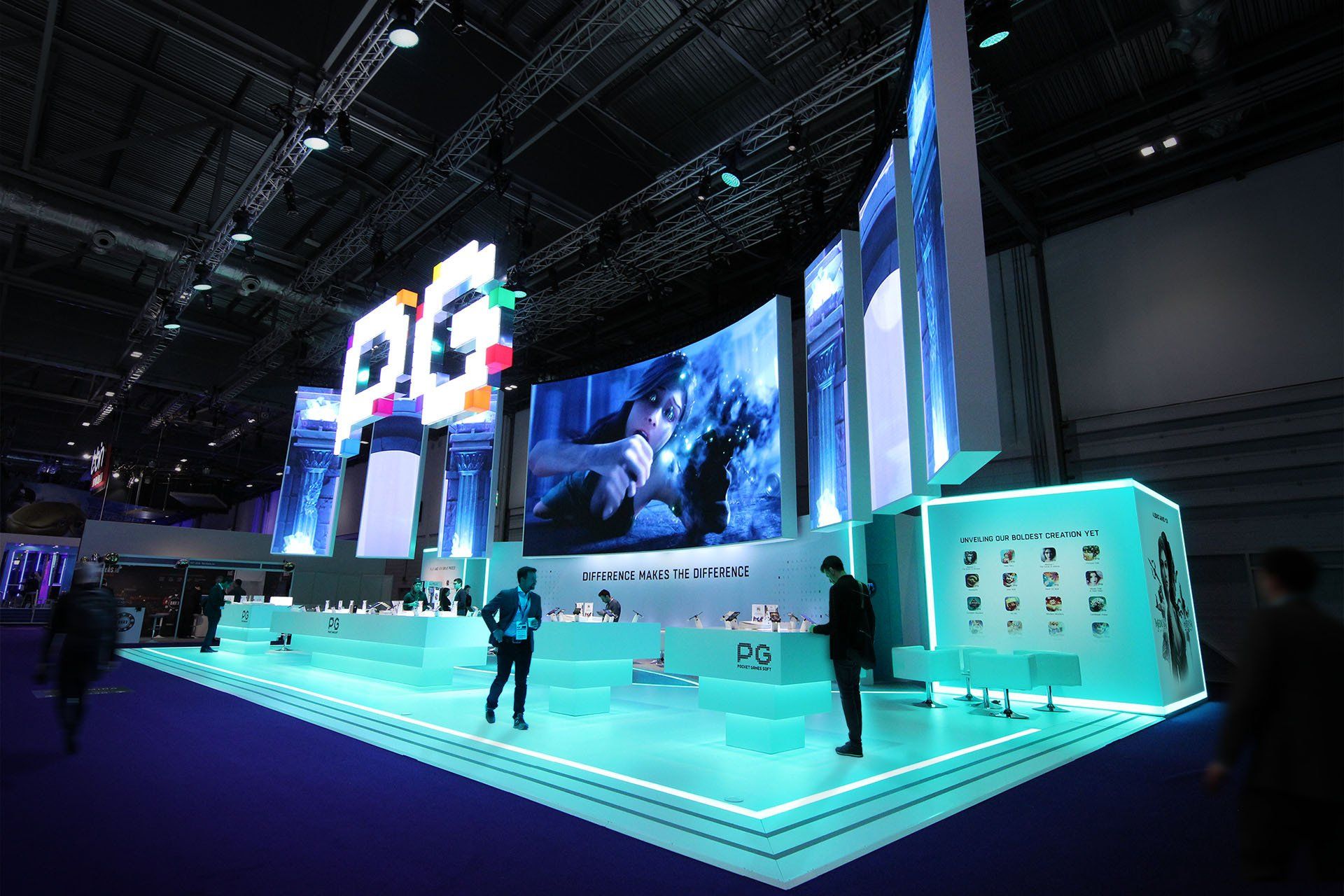
Evolve also designed the Evolution Gaming stand, at ICE 2024 in London, which used wrap-around LED screens at a corner position to create a visual presence that was impossible to ignore from multiple directions across the hall. Content flowed continuously around the stand, and the playable content inside generated the kind of footfall and dwell time that the show floor's most competitive stands require.

At Gamescom - Europe's largest gaming show and one of the world's most competitive exhibition environments - the expectations are different again. Consumer-facing gaming exhibitions need experiences that generate queues, social content, and word-of-mouth, as well as the professional B2B relationships that the industry's trade day demands. Playable demo stations need to be built for throughput as well as quality: comfortable seating, high-specification displays and audio, clear rotation between players, and social viewing angles that let those waiting feel part of the experience rather than just queuing for it. Tournament-style formats, leader-boards, and scheduled competitive sessions transform a stand from a destination into an event, drawing visitors back repeatedly across the show and creating the energy that defines a brand's presence on the floor.


The principle that connects all of these - from a casino showroom in London to a gaming demo station in Cologne - is that the interactive experience needs to be designed for the specific audience in that specific context. What works at a consumer gaming show is different from what works at a B2B technology conference, and what works at MWC is different again.


Interactive Design at Scale: MWC and Major Technology Shows

At MWC Barcelona, one of the world's largest and most competitive technology exhibitions, interactive exhibition design operates at a different scale and with a different set of objectives to the gaming sector. The audiences are senior professionals such as CTOs, procurement decision-makers or strategic partners and the interactions need to reflect that.


The most effective interactive elements at MWC tend to be less about entertainment and more about demonstration: making complex technology tangible, showing capability in ways that specifications alone cannot convey, and creating the conditions for substantive conversations with exactly the right people. Large-format touchscreens presenting network architecture, AR demonstrations of infrastructure at scale, interactive data visualisations that let visitors explore performance metrics relevant to their specific context - these are the tools that perform in this environment.


Evolve has been working at MWC since 2016, and the understanding of what the Fira Gran Via environment demands, both technically and experientially, informs every interactive recommendation we make for clients exhibiting there. The venue's scale, the quality of the competing stands, and the sophistication of the audience all set a high bar. Interactive installations need to meet it.


Data Capture: The Commercial Value of Interactive Design

One of the most significant and underappreciated advantages of interactive exhibition design is the quality of the data it generates.

Traditional exhibition lead capture options include badge scanning, business card collection and manual sign-up, which all tell you who visited. Interactive systems tell you what they were interested in. The difference is commercially significant.

A visitor who spent twelve minutes with a product configurator and explored three specific product lines is a fundamentally different lead from one who paused briefly at a touchscreen before moving on. Both might appear in the same post-show export. Only one represents an immediate sales priority.


Behavioural data captured through interactive systems - which content sections attracted engagement, how long visitors spent, what specifications or options they explored - allows for lead scoring that reflects genuine interest rather than physical proximity. This information flows directly into CRM systems in real time, enabling sales follow-up that is specific, timely, and based on what the prospect actually cared about rather than what the stand team assumed they might.


For European shows, data capture systems need to be GDPR-compliant from the outset: clear opt-ins, appropriate privacy notices, and properly managed consent. This is not an afterthought but a design requirement, and working with an exhibition agency that understands these requirements matters.


Physical Integration: Where Technology Meets Spatial Design

Interactive technology does not exist in isolation. It needs to be physically integrated into the stand in ways that are spatially logical, operationally sound, and visually coherent with the overall design.


Positioning is the first consideration. Interactive elements need to be visible from main traffic flows to attract initial engagement, while allowing enough circulation space around them that a crowd can form without creating a bottleneck that discourages entry. This balance - visible but not obstructive, accessible but not exposed - requires spatial planning that considers the technology and human behaviour around it together, not separately.


Lighting affects interactive display performance significantly. Touchscreens in direct overhead light suffer from glare. Projection requires controlled ambient conditions. LED video walls need to be balanced against the overall lighting design of the stand to avoid either washing out other elements or creating harsh contrast. These are technical decisions that need to be made during the design phase, not resolved during installation.


Technical infrastructure - power, data connectivity, equipment cooling, maintenance access - determines where interactive elements can physically be positioned and affects the overall stand budget. These requirements need to be resolved during design development. Discovering on installation day that the power supply is insufficient, or that there is no access route to a component that needs daily attention, is an avoidable problem that professional exhibition design prevents.


The best interactive exhibition stands are the ones where none of this shows. Where the technology feels like it belongs, where the spatial logic is clear, and where visitors engage naturally without being aware of the considerable planning that made that experience possible.


Measuring What Interactive Design Delivers

Interactive systems generate more measurable data than almost any other element of exhibition design, and that data should be used.

Engagement metrics - how many people interacted, average engagement duration, content sections explored, drop-off points - reveal what is working and what is not. Over multiple shows, this information builds a picture of what genuinely resonates with your audience and what is attracting attention without converting it into meaningful engagement.


Lead quality indicators from interaction patterns allow sales teams to prioritise follow-up with precision. Comparative data across different shows and venues reveals how the same content performs in different contexts - useful intelligence for refining both the interactive content and the broader exhibition strategy.


Return on investment from interactive exhibition design needs to account for both direct and indirect value. The direct value - qualified leads, pipeline generated, meetings booked - is the most immediately measurable. The indirect value - brand perception, social reach, competitive positioning - is harder to quantify but equally real. A stand that is genuinely memorable, that people photograph and talk about and recommend to colleagues, is generating value that extends well beyond the days of the show itself.


Designing for the Right Experience, Not the Most Impressive Technology

The most effective interactive exhibition stands are not necessarily the ones with the most sophisticated technology. They are the ones where the choices made about which technologies to use, how to integrate them spatially, what content to present through them, and what objectives they are designed to serve are coherent and purposeful.


That coherence is the product of treating interactive design as a strategic discipline rather than a feature list. The question is not "what technology could we use?" but "what do we want visitors to feel, understand, and do and what role can interactive design play in making that happen?". When that question is answered well, the technology becomes invisible. What remains is an experience.

See how Evolve approaches interactive exhibition design →

6 August 2026
The exhibitor's guide: from brief to build
14 July 2026
The principles of brand-led reception design
Modern conference room with a long table, blue chairs, wall TV, and circular ceiling lights
by Elizabeth Haworth 19 June 2026
Designing B2B Meeting Spaces
by Elizabeth Haworth 5 June 2026
Explore how organic & geometric shapes enhance brand storytelling in exhibition stands. Contact us for innovative design solutions.
Planting on the Telenor exhibition stand at MWC Barcelona, created by Evolve
by Elizabeth Haworth 22 May 2026
Explore how biophilic design enhances exhibition stands by integrating nature for improved visitor comfort. Contact Evolve for innovative solutions.
by Elizabeth Haworth 14 May 2026
Transform audiences into advocates with immersive brand experiences. Contact us to elevate your exhibition stand design today!
by Elizabeth Haworth 12 May 2026
Evolve wins Stand Design award at Eventex Awards 2026 ๐Ÿ†
An independently verified signal that an agency meets rigorous standards across health and safety
by Elizabeth Haworth 8 May 2026
Learn how to choose an accredited exhibition agency for your event. Ensure safety & quality with Evolve's expert design solutions.
29 April 2026
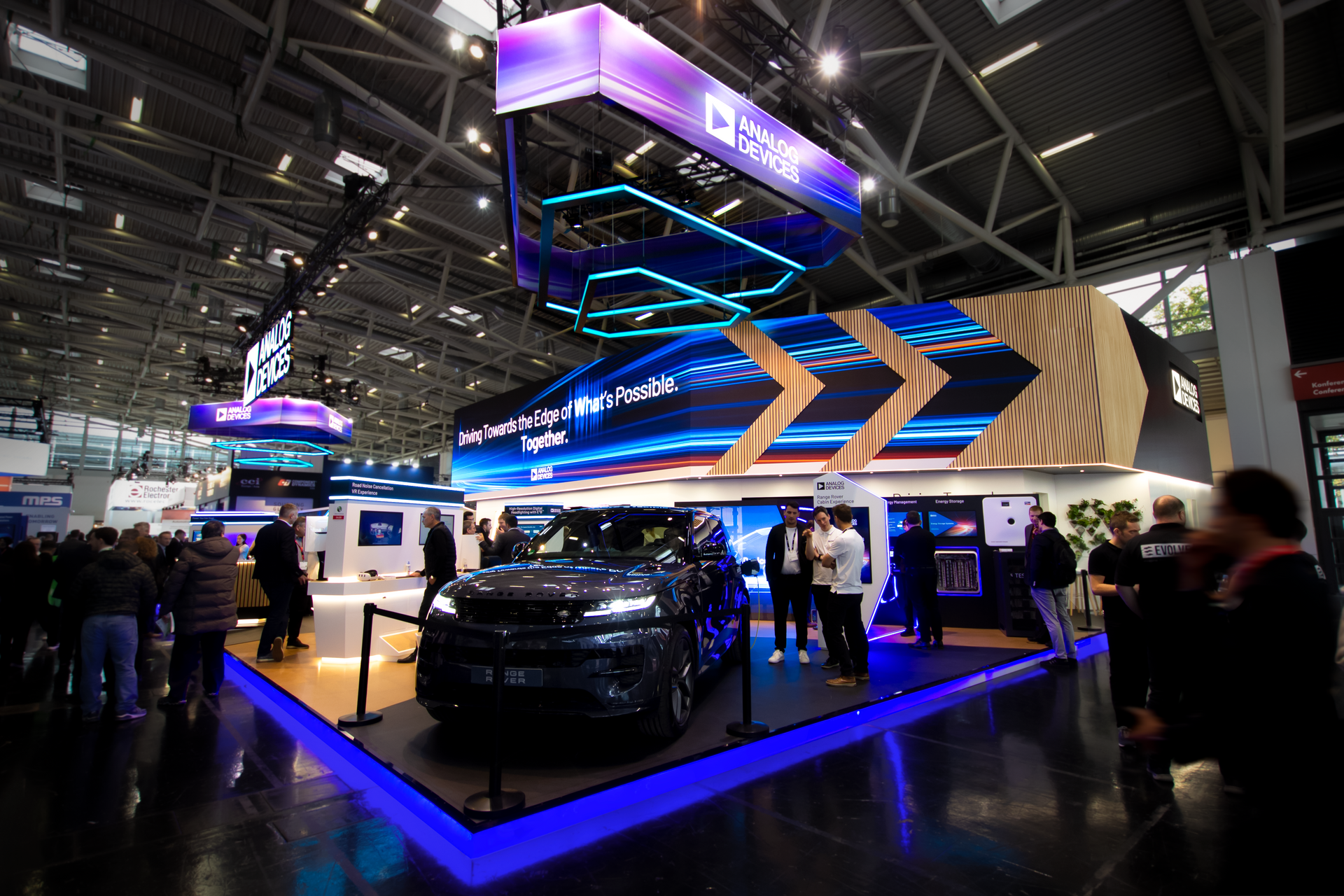
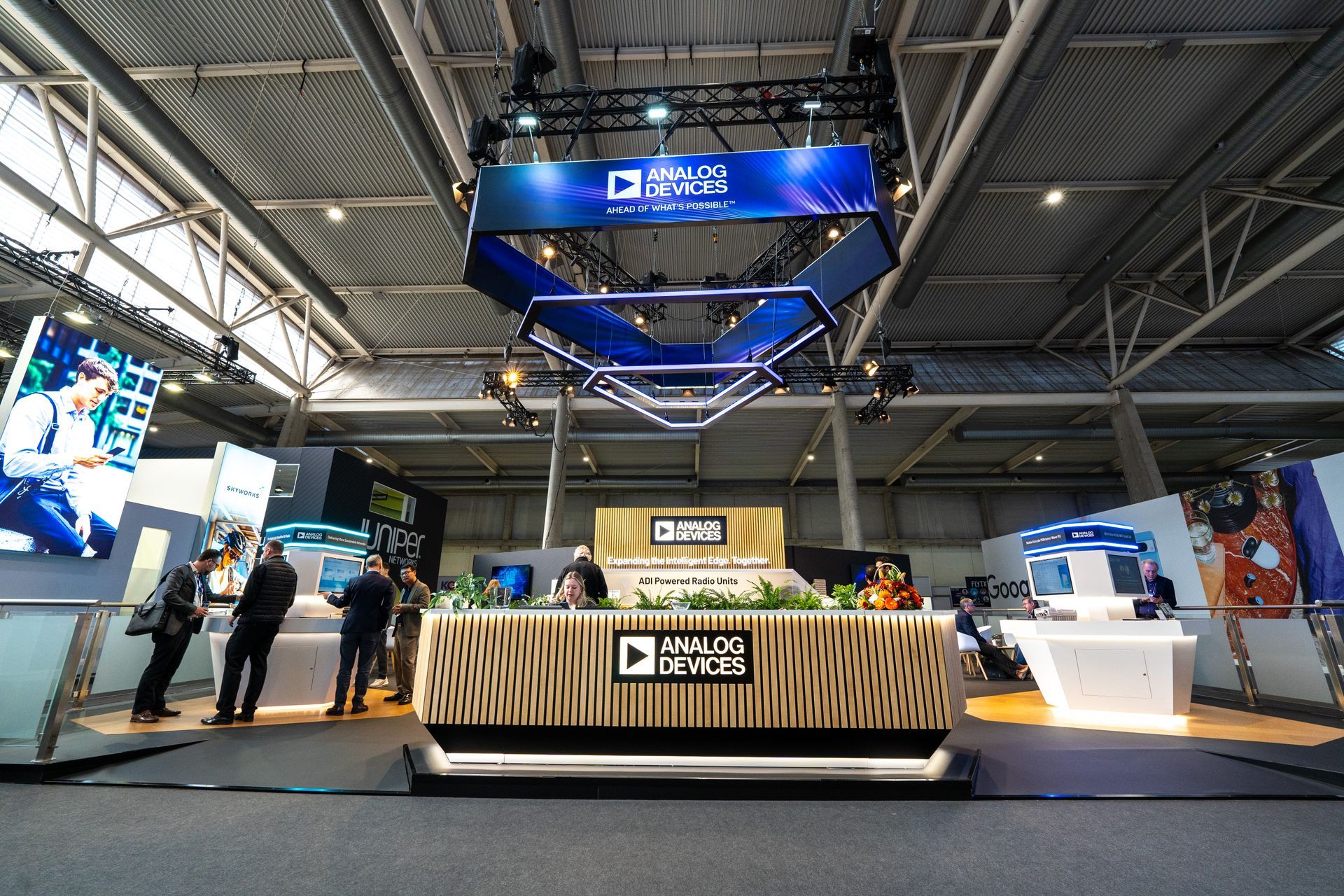
Electronica in Munich is one of the biggest dates in the tech exhibition calendar, and in 2024 we delivered what turned out to be one of the standout spaces at the show for our fantastic client, Analog Devices. We set the bar high for 2024 and with Electronica 2026 coming around fast, we're talking to our Creative Director, Richard Bartlett, about what makes a great exhibition space at a show like this. Tech show audiences are different. They're not browsing, they're evaluating. Engineers, procurement leads and product specialists who have come specifically to compare, interrogate and decide. A stand that works at a consumer show won't necessarily work at Electronica or Embedded World and understanding that difference is where good exhibition design starts. So what does work? Clarity of proposition . Visitors should understand within seconds what you do and why it matters to them. Busy show floors are unforgiving and if your messaging requires effort, most people won't bother. Functional, interactive demonstrations . At a tech show, people want to see products working, not just described. Demo zones need to be designed around the experience of using something rather than simply displaying it - intuitive, engaging, and staffed by people who know the product inside out. Space to have a real conversation . The best tech stands balance open, accessible zones with quieter areas where meaningful dialogue can happen. The demo that impresses is only useful if there's somewhere to follow it up. Practical hospitality . A coffee and somewhere to sit might sound simple, but at a long show day it matters more than you'd think. Hospitality that feels considered rather than bolted on keeps people on your stand longer and leaves a much better impression. Credibility in the details . At a tech show, the quality of your stand is part of your brand story. Poor finishes, bad lighting or a layout that feels like an afterthought sends a message you probably don't intend. Reusability built in from the start . The brands that show up consistently and confidently across multiple shows tend to think about their stand as a long-term asset rather than a one-off expense. Evolve have been delivering stands at Electronica, Embedded World and across the global tech exhibition calendar for years. If you're planning for November, now is the time to start that conversation. Have a look at some of our previous work in this sector here .
30 December 2025
Exhibition Design London: Venues, Budgets & Compliance London stands as one of Europe's premier exhibition destinations, hosting hundreds of major B2B trade shows annually. From technology and gaming to manufacturing and professional services, brands from across the world converge on London's exhibition venues to connect with UK and European markets. But exhibiting successfully in London requires understanding the specific characteristics of its venues, the realistic budget implications, and the compliance requirements that shape what's possible. London's Major Exhibition Venues The ExCel Centre dominates London's exhibition landscape. Located in the Docklands area of East London, ExCel offers over 100,000 square metres of exhibition space across two interconnected halls. Its waterfront location and excellent transport links make it the preferred venue for major international shows. The space can accommodate everything from compact 50 square metre stands to expansive multi-level flagship presences exceeding 1,000 square metres. ExCel's infrastructure supports technically sophisticated builds. Substantial ceiling heights allow for impressive vertical elements and suspended features. Comprehensive power distribution, robust internet connectivity, and extensive rigging points enable the LED walls, lighting arrays, and digital systems that characterise modern high-impact stands. The venue's experienced operations team understands complex exhibition requirements and works efficiently with contractors who know the space. Venue-specific considerations at ExCel affect design and budget. Access for larger vehicles requires specific routing and timing coordination. Loading dock allocation follows strict schedules, typically allowing 36-48 hours for major stand installation. Electrical supply requires booking through venue-approved contractors at rates that can be substantially higher than standard commercial power costs. Understanding these factors during early planning prevents budget surprises. Exhibition design London projects occasionally use other venues for specialist shows. Olympia in West London hosts certain consumer and design-focused events. Alexandra Palace appeals for its historic character. But for major B2B trade shows—which represent the vast majority of serious exhibition investment—ExCel is the primary venue. Budget Realities for London Exhibitions London exhibitions carry premium costs compared to many other European cities. Understanding these budget implications helps set realistic expectations and ensures adequate resources for achieving your objectives. Stand construction costs in London reflect higher labour rates, venue charges, and the generally elevated cost of doing business in the capital. Venue charges extend beyond the basic space rental. Electricity at ExCel is metered and can represent a significant portion of total costs for stands with substantial lighting and display systems. Internet connectivity, while improving, remains surprisingly expensive. Rigging points for suspended elements carry per-point charges. Waste management fees apply. These ancillary costs can add 15-25% to the base construction budget. Labour costs for installation and dismantling reflect London's wage levels. Experienced exhibition contractors command appropriate rates for their expertise, and the skilled teams required for sophisticated builds are in high demand during busy show periods. Rush jobs or compressed schedules increase costs further as contractors need to deploy additional resources to meet tight deadlines. Transport and logistics within London add complexity and cost. Access restrictions, congestion charges, and limited loading dock availability mean materials often can't be delivered directly when ideal. Storage costs for early-arriving shipments or materials used across multiple shows affect budget planning. Design Approaches That Work in London Successful exhibition design London projects balance impact with practicality, creating stands that achieve business objectives within budget and venue constraints. Maximising vertical impact makes sense in venues like ExCel where ceiling heights allow for dramatic upward elements. Tall illuminated structures, suspended graphics, and elevated signage create visibility across the show floor, drawing attention from distance and establishing presence. This vertical emphasis often delivers better value than simply expanding the footprint. LED and mesh LED technology creates spectacular visual impact while remaining relatively efficient to transport and install. A large LED wall that might seem extravagant actually represents smart investment—it provides dynamic, changeable content, generates excellent visual attraction, and can be reused across multiple shows. The upfront costs amortise quickly across an exhibition programme. Modular design principles support sustainability and budget management. A well-designed modular system looks purposefully created for each show while actually comprising reusable components that reconfigure for different spaces. This approach particularly suits brands exhibiting regularly in London, allowing investment in quality infrastructure that serves multiple events. Strategic space allocation focuses resources where they deliver greatest impact. A 200 square metre stand that invests heavily in a spectacular entrance, high-quality meeting spaces, and excellent lighting will typically outperform a 300 square metre space with mediocre execution throughout. Understanding your primary objectives—lead generation, client hosting, product launches—ensures budget flows to the elements that matter most. Compliance and Regulations London exhibition venues operate under stringent safety and compliance requirements. Understanding and meeting these regulations is non-negotiable for successful stand builds. Electrical certification requirements are particularly rigorous at ExCel. All electrical installations require testing and certification by approved contractors before power is supplied. This includes detailed inspection of distribution boards, socket outlets, lighting systems, and any equipment connected to the supply. Installations failing inspection must be corrected before power is provided, potentially delaying stand completion. Structural engineering approval applies to multi-level builds, suspended elements, and anything requiring venue rigging points. Detailed drawings and calculations must be submitted well in advance—typically 4-6 weeks before build—to allow for review and approval. Last-minute structural elements rarely receive approval in time for installation. Fire safety regulations govern materials, exit routes, and emergency procedures. Materials must meet specified fire ratings. Exit routes need to remain clear and properly marked. Fire extinguishers and safety equipment must be positioned according to venue requirements. Exhibition stand designers familiar with London venues build these requirements into designs from the start rather than treating them as afterthoughts. Health and safety documentation includes risk assessments, method statements, and proof of contractor insurance. ExCel requires advance submission of these documents, and contractors without proper compliance can be refused venue access. Professional exhibition contractors maintain current documentation and understand exactly what each venue requires. Working with Exhibition Stand Designers in London The London exhibition industry includes contractors ranging from small specialists to international exhibition companies with comprehensive capabilities . Choosing partners appropriate for your needs affects both results and experience. Local expertise matters enormously. Exhibition contractors who regularly build at ExCel understand its peculiarities, have established relationships with venue staff, know which local suppliers are reliable, and can navigate the venue's specific procedures efficiently. This familiarity translates to smoother builds, fewer surprises, and less stress for your team. Portfolio and experience with similar projects indicate capability. A contractor who excels at consumer pop-ups might struggle with a sophisticated B2B tech stand requiring extensive AV integration and client hospitality areas. Review actual completed projects in your sector and at venues where you'll be exhibiting. Project management capabilities become critical for London shows where timing constraints are tight and multiple suppliers need coordination. The ability to manage electricians, AV specialists, graphic installers, furniture suppliers, and other contractors while adhering to strict venue schedules separates professional exhibition design companies from less capable alternatives. Communication and responsivenes s affect your experience throughout the project. Exhibition design moves through multiple decision points, from initial concepts to technical specifications to final details. Contractors who communicate proactively, respond quickly to questions, and keep you informed of progress make the entire process significantly less stressful. Planning Timeline for London Exhibitions Major London exhibitions operate on predictable schedules, and understanding typical timelines helps ensure adequate preparation. Initial planning should begin 6-9 months before show date for major exhibitions. This allows time to brief designers, review concepts, refine designs, and secure exhibition services while first-choice contractors still have availability. Waiting until 3-4 months before the show often means working with second-choice suppliers or paying premium rates for expedited work. Design development typically requires 4-8 weeks from initial brief to approved construction drawings. This includes concept development, client reviews and refinements, technical specification, and production of detailed drawings for fabrication and compliance approvals. Compressed schedules are possible but reduce time available for optimisation. Fabrication timelines vary by stand complexity. Simple builds might require 3-4 weeks from approved drawings to completed components ready for installation. Sophisticated stands with custom fabrication, complex graphics, and integrated technology need 6-8 weeks or more. Rushing fabrication compromises quality—evident in the finished stand. Venue compliance submissions require advance planning. Structural approvals at ExCel typically need submission 4-6 weeks before build. Electrical diagrams should be available for venue review at similar timeframes. Health and safety documentation is usually required 2-3 weeks before move-in. Professional contractors manage these submissions, but late design changes can compromise compliance timelines. Maximising ROI from London Exhibitions London exhibitions represent significant investment. Maximising return requires thinking beyond the stand itself to the entire exhibition programme. Pre-show marketing deserves substantial attention. With hundreds or thousands of companies exhibiting, getting existing customers and prospects to actually visit your stand requires advance promotion. Email campaigns, social media, direct outreach to key accounts—all increase footfall and opportunity. Interactive experience London elements give you compelling content for pre-show promotion. On-stand engagement strategies determine conversion rates. Having the right team, properly trained on objectives and messages, makes the difference between collecting business cards and generating qualified opportunities. Clear roles, good briefing, and appropriate staffing levels for anticipated traffic ensure you capitalise on the footfall your stand attracts. Post-show follow-up converts interest into business. Leads captured at the show have immediate value but deteriorate rapidly if not contacted promptly. Systematic follow-up processes, whether through sales teams or marketing automation, ensure exhibition investment translates to pipeline and revenue. Multi-show programmes deliver better ROI than one-off appearances. Reusable stand infrastructure, refined processes, and cumulative brand presence all improve efficiency and effectiveness over time. Thinking about London exhibitions as part of an ongoing programme rather than isolated events supports smarter investment decisions. Making London Exhibitions Work for Your Brand London offers unparalleled access to UK and European markets through world-class exhibition facilities and major international trade shows. Success requires understanding the specific characteristics of London venues, realistic budget planning, rigorous attention to compliance requirements, and working with experienced contractors who deliver reliably in this demanding environment. Whether you're exhibiting in London for the first time or refining an established presence, professional exhibition services with deep London experience ensure your investment delivers maximum impact and genuine business results. Contact us to discuss your next steps.