news

Explore different design trends and features in the exhibition and brand experience world at the moment.
by Elizabeth Haworth 5 June 2026
Explore how organic & geometric shapes enhance brand storytelling in exhibition stands. Contact us for innovative design solutions.
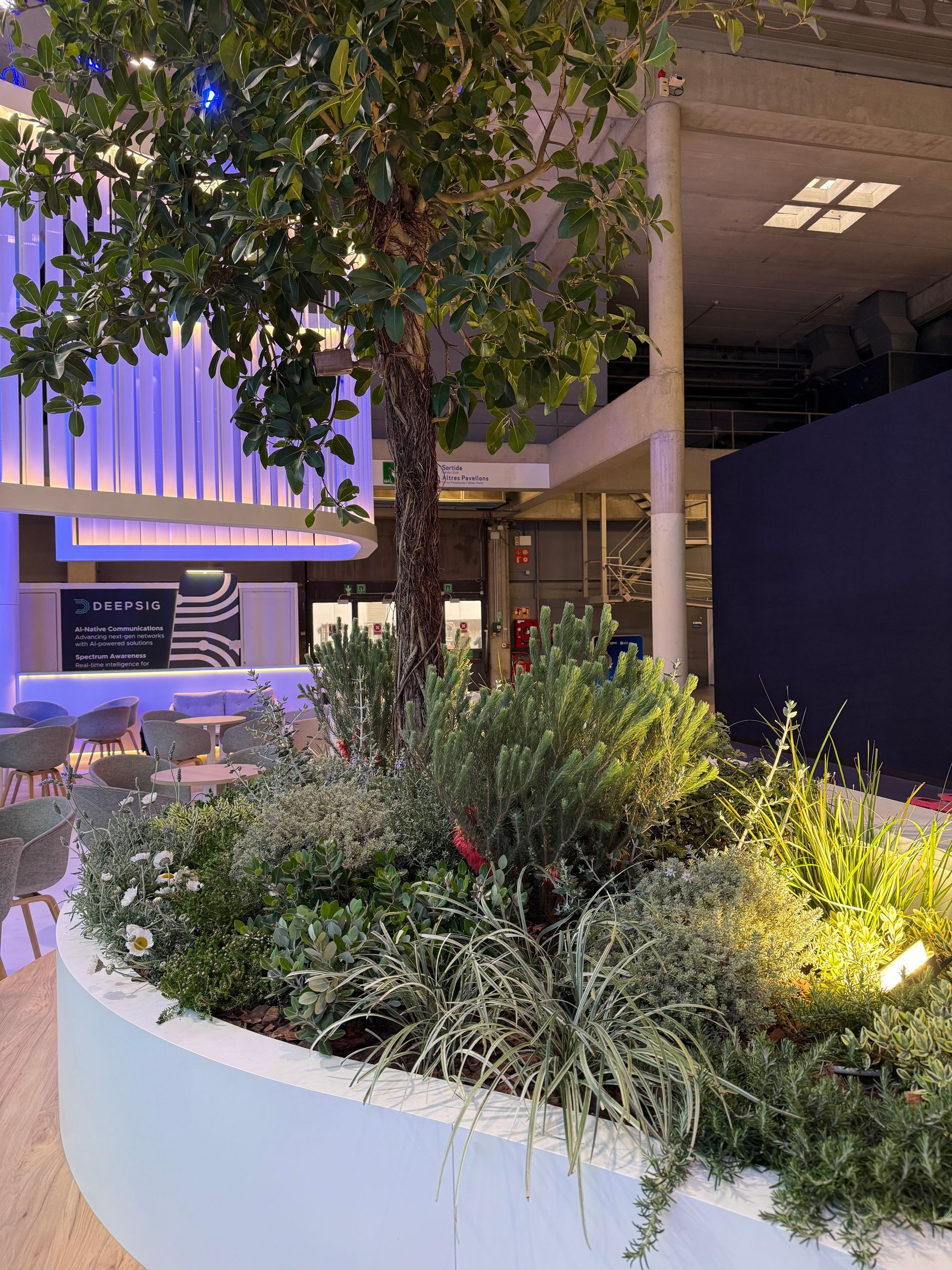
Planting on the Telenor exhibition stand at MWC Barcelona, created by Evolve
by Elizabeth Haworth 22 May 2026
Explore how biophilic design enhances exhibition stands by integrating nature for improved visitor comfort. Contact Evolve for innovative solutions.
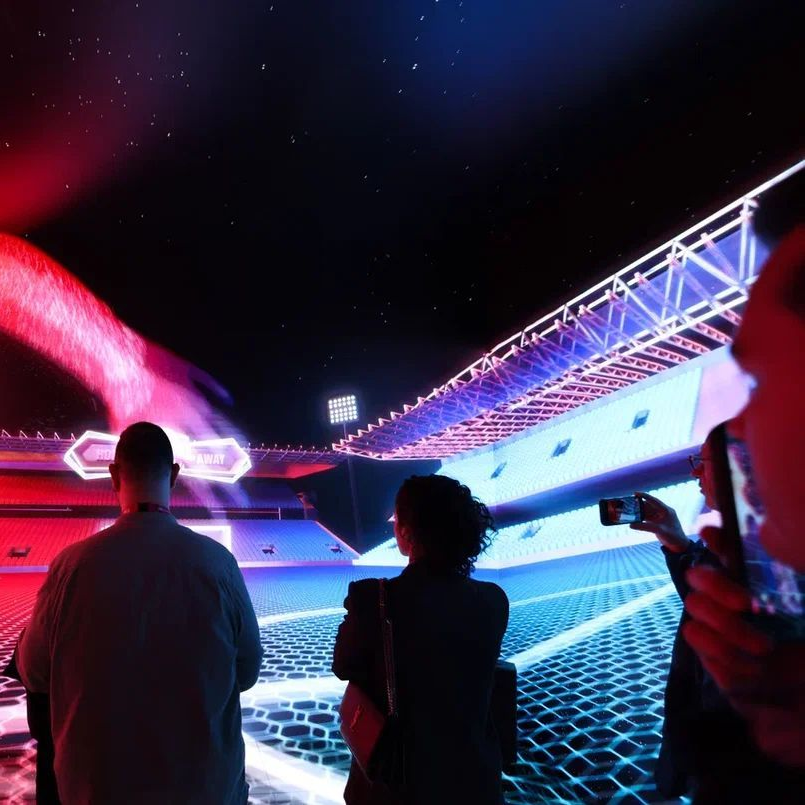
by Elizabeth Haworth 14 May 2026
Transform audiences into advocates with immersive brand experiences. Contact us to elevate your exhibition stand design today!

by Elizabeth Haworth 12 May 2026
Evolve wins Stand Design award at Eventex Awards 2026 🏆

An independently verified signal that an agency meets rigorous standards across health and safety
by Elizabeth Haworth 8 May 2026
Learn how to choose an accredited exhibition agency for your event. Ensure safety & quality with Evolve's expert design solutions.
29 April 2026
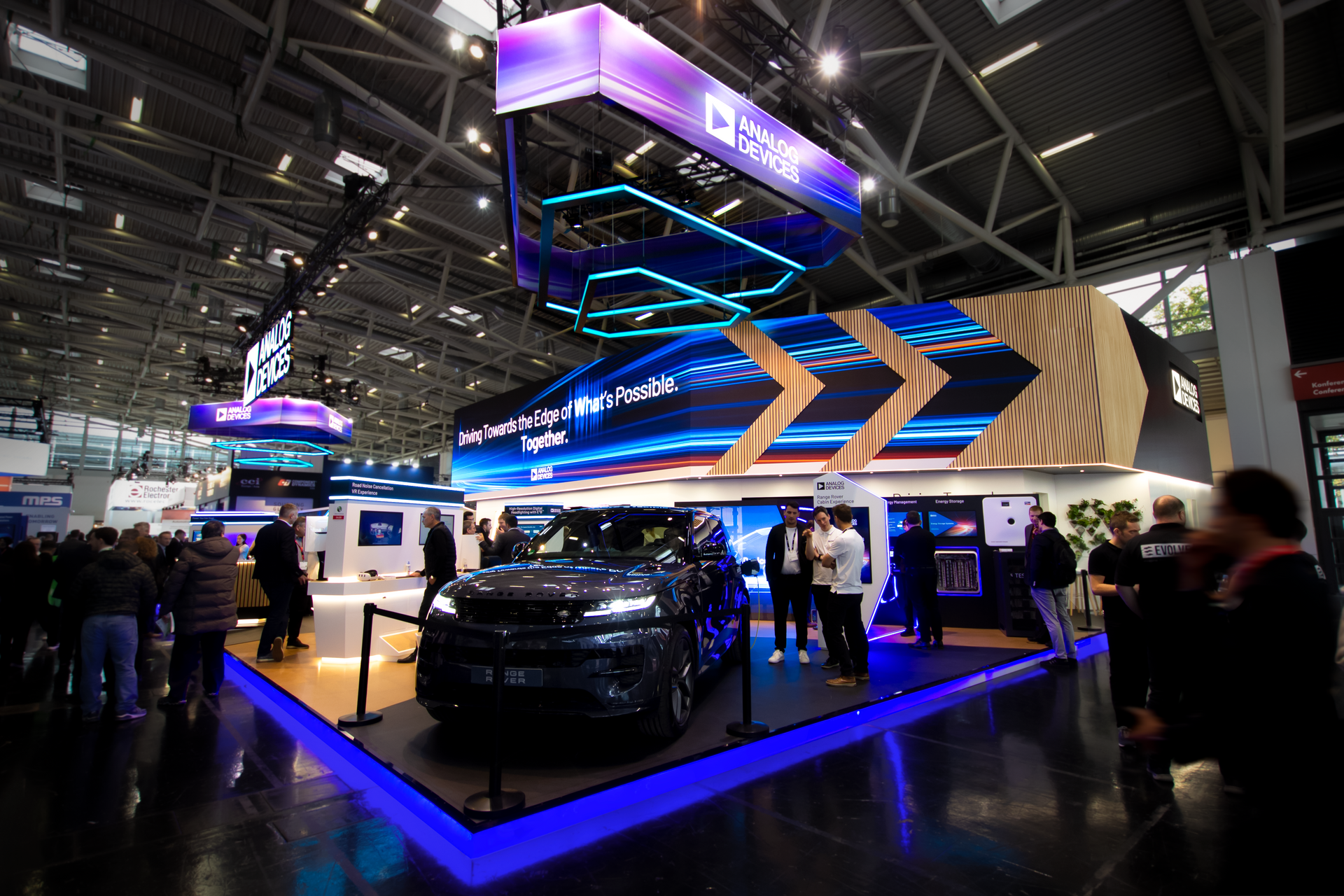
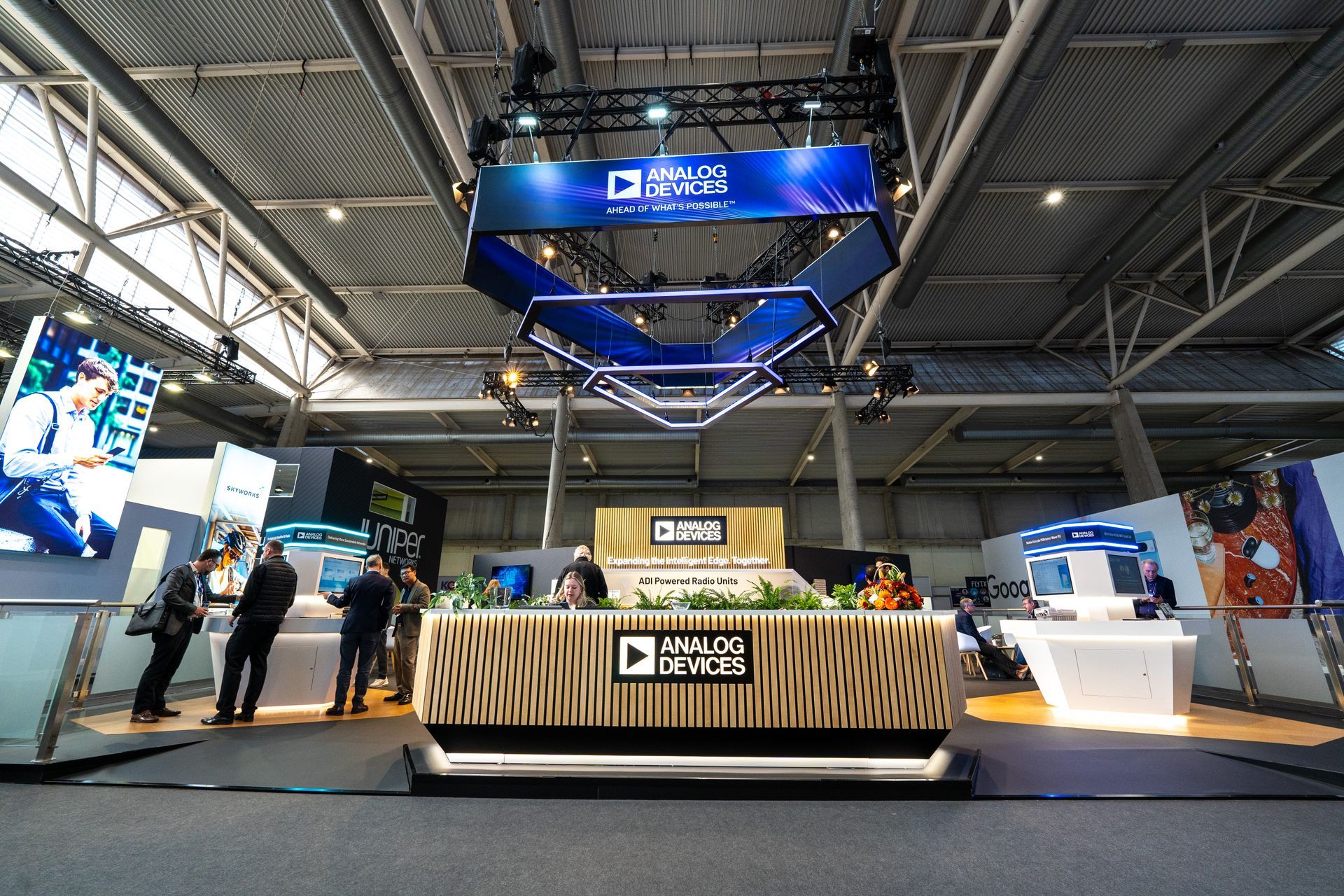
Electronica in Munich is one of the biggest dates in the tech exhibition calendar, and in 2024 we delivered what turned out to be one of the standout spaces at the show for our fantastic client, Analog Devices. We set the bar high for 2024 and with Electronica 2026 coming around fast, we're talking to our Creative Director, Richard Bartlett, about what makes a great exhibition space at a show like this. Tech show audiences are different. They're not browsing, they're evaluating. Engineers, procurement leads and product specialists who have come specifically to compare, interrogate and decide. A stand that works at a consumer show won't necessarily work at Electronica or Embedded World and understanding that difference is where good exhibition design starts. So what does work? Clarity of proposition . Visitors should understand within seconds what you do and why it matters to them. Busy show floors are unforgiving and if your messaging requires effort, most people won't bother. Functional, interactive demonstrations . At a tech show, people want to see products working, not just described. Demo zones need to be designed around the experience of using something rather than simply displaying it - intuitive, engaging, and staffed by people who know the product inside out. Space to have a real conversation . The best tech stands balance open, accessible zones with quieter areas where meaningful dialogue can happen. The demo that impresses is only useful if there's somewhere to follow it up. Practical hospitality . A coffee and somewhere to sit might sound simple, but at a long show day it matters more than you'd think. Hospitality that feels considered rather than bolted on keeps people on your stand longer and leaves a much better impression. Credibility in the details . At a tech show, the quality of your stand is part of your brand story. Poor finishes, bad lighting or a layout that feels like an afterthought sends a message you probably don't intend. Reusability built in from the start . The brands that show up consistently and confidently across multiple shows tend to think about their stand as a long-term asset rather than a one-off expense. Evolve have been delivering stands at Electronica, Embedded World and across the global tech exhibition calendar for years. If you're planning for November, now is the time to start that conversation. Have a look at some of our previous work in this sector here .
An interactive product demonstration on a booth at ICE Barcelona
13 January 2026
Interactive Exhibition Design: Tech to Try This Year Exhibition stands have evolved from static displays into dynamic, engaging environments where visitors actively participate rather than passively observe. Interactive exhibition design creates memorable experiences that generate deeper engagement, better lead quality, and stronger brand recall. Understanding which technologies deliver genuine value and which are merely novelty helps brands invest wisely in interactive elements that support business objectives. The Evolution of Interactive Exhibition Experiences The shift toward interactive exhibition design reflects broader changes in how people expect to engage with brands. Visitors at B2B shows arrive with higher expectations, shaped by sophisticated consumer experiences and advanced technology in their professional lives. Static product displays and traditional presentations no longer capture attention or create the memorable moments that drive business outcomes. Interactive elements serve multiple purposes in exhibition strategy: They attract visitors from across the show floor, creating the initial engagement that starts conversations. They demonstrate product capabilities more effectively than any presentation could. They gather valuable data about visitor interests and engagement patterns. And perhaps most importantly, they create shareable moments that extend your reach beyond the physical show through social media and word-of-mouth. The key is ensuring interactivity serves your objectives rather than existing for its own sake. Technology should enhance the visitor experience and support your business goals, not distract from your core messages or create barriers to meaningful conversation. Proven Interactive Technologies for 2025 Certain interactive technologies have matured to the point where they deliver reliable, measurable value in exhibition environments. These represent smart investments for brands seeking to enhance their presence. Large-format touchscreens create intuitive product exploration. A 55-inch or 75-inch touchscreen displaying an interactive product catalogue allows visitors to browse at their own pace, filtering by application, specification, or industry. The system can capture which products generate most interest, providing valuable insights alongside the immediate engagement benefit. Touch interfaces feel natural to users and require minimal instruction or staffing support. Interactive product configurators bring customisation to life. For products with multiple options—machinery, technology systems, vehicles—a configurator lets visitors build their ideal specification and immediately see the result visualised. This not only engages visitors but also qualifies leads by revealing their specific requirements and preferences. The data captured about configuration choices informs sales conversations and helps prioritise follow-up. Gesture-controlled displays offer wow factor with practical application. Wave-based or hand-tracking interfaces let multiple people interact simultaneously without touching anything—valuable for hygiene-conscious environments and for creating crowd moments that draw attention from across the show floor. When tied to meaningful content rather than just flashy effects, gesture control enhances both engagement and memorability. Augmented reality applications demonstrate products that can't physically be at the show. Heavy machinery, large installations, or products still in development can be visualised at full scale through AR headsets or tablet-based applications. This technology has moved well beyond novelty phase - major equipment manufacturers and technology companies use AR routinely to demonstrate capabilities that would be impossible to transport. Gaming Exhibition and Entertainment Sector Applications The gaming exhibition sector pushes interactive boundaries further than perhaps any other industry. Gaming exhibitions demand experiences that meet the expectations of audiences who live with cutting-edge interactive technology daily. Playable demo stations form the core of most gaming exhibition stands. But the execution matters enormously—comfortable seating, high-quality displays and audio, quick rotation between players, and social viewing angles that let others watch and anticipate their turn. The best gaming exhibition setups create mini-arenas where playing becomes a performance and spectating becomes part of the experience. Tournament-style setups elevate engagement dramatically. Rather than isolated play sessions, competitive formats create ongoing energy and draw repeated visitors back to see results and participate. Leaderboards, scheduled competition times, and modest prizes transform your stand into an event destination rather than a passive display. Social integration extends reach beyond the physical stand. Systems that capture gameplay highlights, automatically generate shareable clips, and encourage social posting amplify your presence across attendees' networks. This works particularly well for visually dynamic games where short clips convey excitement effectively. VR experiences in gaming exhibitions need careful consideration. While VR delivers unmatched immersion, throughput limitations mean each headset typically serves only 4-6 people per hour. For shows where footfall is your priority, VR might not be the most efficient choice. But for targeted experiences with key customers or press, VR's impact justifies the investment. Data Capture and Lead Generation Interactive exhibition design offers sophisticated opportunities for data capture that traditional approaches can't match. The key is capturing valuable information without creating friction that reduces engagement. Interest-based qualification happens naturally through interactive content. Which product specifications did someone explore? What price range did they select in the configurator? How long did they engage with different sections? This behavioural data reveals genuine interest and qualifies leads more accurately than form-filling exercises that visitors often complete just to be polite. Progressive profiling balances data collection with user experience. Initial interaction might capture just an email and company name. Further engagement reveals role, specific interests, and project timelines. By the time someone has invested ten minutes with your interactive content, requesting more detailed information feels reasonable and typically sees good completion rates. Integration with CRM systems means exhibition leads flow directly into your sales process. Modern interactive systems can push data in real-time to Salesforce, HubSpot, or other platforms, enabling immediate follow-up while interest is fresh. This integration transforms exhibition data from spreadsheets manually distributed days after the show to actionable information available instantly. Privacy compliance requires attention, particularly for European shows. Interactive systems need clear opt-ins for data collection, appropriate privacy notices, and the ability to manage consent preferences. Professional exhibition stand designers familiar with GDPR requirements build compliant data capture into interactive experiences from the start. Content Strategy for Interactive Installations The technology means nothing if content doesn't engage your audience effectively. Content strategy for interactive exhibition elements requires different thinking than traditional marketing materials. Navigation must be immediately intuitive. Visitors won't read instructions or spend time figuring out how something works. If the interaction isn't obvious within 5-10 seconds, people move on. This means clear visual hierarchy, familiar interaction patterns, and progressive disclosure of complexity - simple surface navigation with deeper detail available for those who want it. Content depth needs careful balancing. Too shallow and you haven't provided value. Too deep and you overwhelm. The sweet spot typically involves multiple tiers - headline messages and key visuals accessible immediately, moderate detail for those who engage briefly, and comprehensive information for serious prospects willing to invest time. Visual quality matters enormously on high-resolution displays. Content created for PowerPoint presentations or standard web viewing often looks pixelated and amateur when displayed on 4K touchscreens. Budget for proper content development at appropriate resolution, with attention to typography, imagery, and motion graphics that leverage the capabilities of your interactive systems. Evolve can advise on suitable technology and also provide excellent content support. Regular updates keep content fresh and relevant. Interactive installations used across multiple shows benefit from periodic content refreshes. Static content that remains unchanged for years feels stale even if the technology remains impressive. Physical Integration and Spatial Design Interactive technology needs thoughtful physical integration into your overall stand design . Technology shouldn't feel bolted on but should form a natural part of the spatial experience. Positioning determines visibility and accessibility. Interactive elements need adequate circulation space around them - crowding creates queues and discourages engagement. But they also need to be visible from main traffic flows to attract initial interest. This balance requires careful space planning that considers both the technology itself and the human behaviour around it. Lighting design significantly affects interactive display visibility. Touchscreens suffer from glare if positioned under direct overhead lighting. Projection systems require controlled ambient light. LED video walls can be bright enough to dominate a space if not balanced with thoughtful overall lighting. Interactive experience London projects that look spectacular in renders need properly considered lighting to look as impressive in real life. Ergonomics affect engagement length and comfort. Touchscreen height, seating for longer interactions, standing height for quick browsing - getting these details right means people actually use your interactive elements rather than glancing and moving on. Accessible design that accommodates different heights and abilities expands your potential audience. Technical infrastructure requires careful planning. Power, data, cooling for equipment, access for maintenance—these practical considerations affect both where interactive elements can be positioned and the overall stand budget. Professional exhibition contractors plan infrastructure during design development, not as an afterthought during installation. Measuring Interactive Exhibition Success Interactive systems generate data that helps measure exhibition effectiveness more precisely than traditional stands allow. Engagement metrics reveal what resonates. How many people interacted? How long did they engage on average? Which content sections attracted most attention? Drop-off points where people disengage signal content that needs improvement. These metrics help refine both your interactive content and your broader exhibition strategy. Lead quality indicators emerge from interaction patterns. Someone who engaged for fifteen minutes and explored detailed product specifications represents a more qualified lead than someone who briefly browsed introductory content. Scoring leads based on engagement depth helps sales teams prioritise follow-up effectively. Comparative analysis across shows reveals trends and guides investment. Which interactive elements delivered the best engagement at different venues? How do metrics vary between gaming exhibition environments and technology trade shows? Understanding these patterns helps optimise future exhibition strategies. Return on investment calculations need to account for both direct and indirect value. Direct value comes from qualified leads and pipeline generated. Indirect value includes brand awareness, social reach, and the competitive positioning that comes from a distinctly impressive presence. Interactive exhibition design typically excels at both direct and indirect value creation. Looking Ahead: Emerging Interactive Technologies Several technologies show promise for exhibition applications over the next 1-2 years, though they require careful evaluation before investment. AI-powered personalisation can adapt content in real-time based on visitor interests and behavior. Systems that recognise industry, role, or specific product interest and adjust what's displayed accordingly create more relevant experiences. This technology is moving from experimental to practical for exhibition applications. Holographic displays create striking visual impact without requiring special glasses or headsets. While expensive, holographic product demonstrations attract attention and create memorable moments that generate social media content and word-of-mouth buzz. Biometric integration remains on the horizon for particular applications. Facial recognition for returning visitors, emotion detection to gauge engagement, physiological responses to content - these capabilities exist but face substantial privacy and regulatory hurdles that limit practical exhibition deployment currently. The key with emerging technologies is careful evaluation of readiness, cost-benefit balance, and alignment with your specific objectives. Being genuinely innovative differs from simply being first to try something that isn't ready for prime use. Creating Effective Interactive Exhibition Experiences Interactive exhibition design has moved from optional enhancement to essential element of competitive exhibition presence. But technology alone doesn't guarantee success. Effective interactive experiences require strategic thinking about objectives, careful technology selection, excellent content, thoughtful physical integration, and ongoing measurement and optimisation. Whether you're incorporating your first interactive elements or expanding an already sophisticated stand, professional exhibition design services ensure technology enhances rather than complicates your exhibition presence, delivering experiences that engage visitors and drive genuine business results.
30 December 2025
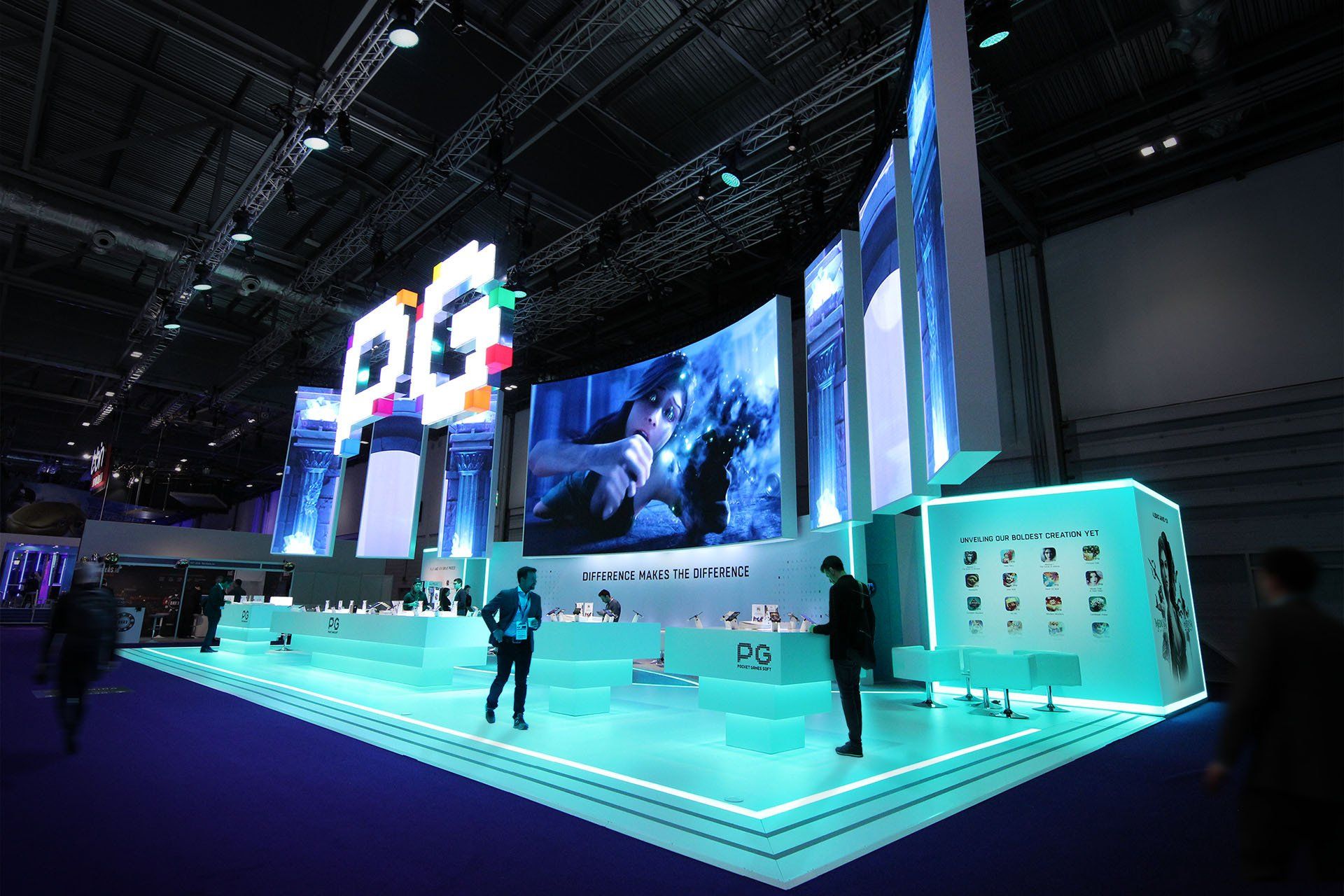
Exhibition Design London: Venues, Budgets & Compliance London stands as one of Europe's premier exhibition destinations, hosting hundreds of major B2B trade shows annually. From technology and gaming to manufacturing and professional services, brands from across the world converge on London's exhibition venues to connect with UK and European markets. But exhibiting successfully in London requires understanding the specific characteristics of its venues, the realistic budget implications, and the compliance requirements that shape what's possible. London's Major Exhibition Venues The ExCel Centre dominates London's exhibition landscape. Located in the Docklands area of East London, ExCel offers over 100,000 square metres of exhibition space across two interconnected halls. Its waterfront location and excellent transport links make it the preferred venue for major international shows. The space can accommodate everything from compact 50 square metre stands to expansive multi-level flagship presences exceeding 1,000 square metres. ExCel's infrastructure supports technically sophisticated builds. Substantial ceiling heights allow for impressive vertical elements and suspended features. Comprehensive power distribution, robust internet connectivity, and extensive rigging points enable the LED walls, lighting arrays, and digital systems that characterise modern high-impact stands. The venue's experienced operations team understands complex exhibition requirements and works efficiently with contractors who know the space. Venue-specific considerations at ExCel affect design and budget. Access for larger vehicles requires specific routing and timing coordination. Loading dock allocation follows strict schedules, typically allowing 36-48 hours for major stand installation. Electrical supply requires booking through venue-approved contractors at rates that can be substantially higher than standard commercial power costs. Understanding these factors during early planning prevents budget surprises. Exhibition design London projects occasionally use other venues for specialist shows. Olympia in West London hosts certain consumer and design-focused events. Alexandra Palace appeals for its historic character. But for major B2B trade shows—which represent the vast majority of serious exhibition investment—ExCel is the primary venue. Budget Realities for London Exhibitions London exhibitions carry premium costs compared to many other European cities. Understanding these budget implications helps set realistic expectations and ensures adequate resources for achieving your objectives. Stand construction costs in London reflect higher labour rates, venue charges, and the generally elevated cost of doing business in the capital. Venue charges extend beyond the basic space rental. Electricity at ExCel is metered and can represent a significant portion of total costs for stands with substantial lighting and display systems. Internet connectivity, while improving, remains surprisingly expensive. Rigging points for suspended elements carry per-point charges. Waste management fees apply. These ancillary costs can add 15-25% to the base construction budget. Labour costs for installation and dismantling reflect London's wage levels. Experienced exhibition contractors command appropriate rates for their expertise, and the skilled teams required for sophisticated builds are in high demand during busy show periods. Rush jobs or compressed schedules increase costs further as contractors need to deploy additional resources to meet tight deadlines. Transport and logistics within London add complexity and cost. Access restrictions, congestion charges, and limited loading dock availability mean materials often can't be delivered directly when ideal. Storage costs for early-arriving shipments or materials used across multiple shows affect budget planning. Design Approaches That Work in London Successful exhibition design London projects balance impact with practicality, creating stands that achieve business objectives within budget and venue constraints. Maximising vertical impact makes sense in venues like ExCel where ceiling heights allow for dramatic upward elements. Tall illuminated structures, suspended graphics, and elevated signage create visibility across the show floor, drawing attention from distance and establishing presence. This vertical emphasis often delivers better value than simply expanding the footprint. LED and mesh LED technology creates spectacular visual impact while remaining relatively efficient to transport and install. A large LED wall that might seem extravagant actually represents smart investment—it provides dynamic, changeable content, generates excellent visual attraction, and can be reused across multiple shows. The upfront costs amortise quickly across an exhibition programme. Modular design principles support sustainability and budget management. A well-designed modular system looks purposefully created for each show while actually comprising reusable components that reconfigure for different spaces. This approach particularly suits brands exhibiting regularly in London, allowing investment in quality infrastructure that serves multiple events. Strategic space allocation focuses resources where they deliver greatest impact. A 200 square metre stand that invests heavily in a spectacular entrance, high-quality meeting spaces, and excellent lighting will typically outperform a 300 square metre space with mediocre execution throughout. Understanding your primary objectives—lead generation, client hosting, product launches—ensures budget flows to the elements that matter most. Compliance and Regulations London exhibition venues operate under stringent safety and compliance requirements. Understanding and meeting these regulations is non-negotiable for successful stand builds. Electrical certification requirements are particularly rigorous at ExCel. All electrical installations require testing and certification by approved contractors before power is supplied. This includes detailed inspection of distribution boards, socket outlets, lighting systems, and any equipment connected to the supply. Installations failing inspection must be corrected before power is provided, potentially delaying stand completion. Structural engineering approval applies to multi-level builds, suspended elements, and anything requiring venue rigging points. Detailed drawings and calculations must be submitted well in advance—typically 4-6 weeks before build—to allow for review and approval. Last-minute structural elements rarely receive approval in time for installation. Fire safety regulations govern materials, exit routes, and emergency procedures. Materials must meet specified fire ratings. Exit routes need to remain clear and properly marked. Fire extinguishers and safety equipment must be positioned according to venue requirements. Exhibition stand designers familiar with London venues build these requirements into designs from the start rather than treating them as afterthoughts. Health and safety documentation includes risk assessments, method statements, and proof of contractor insurance. ExCel requires advance submission of these documents, and contractors without proper compliance can be refused venue access. Professional exhibition contractors maintain current documentation and understand exactly what each venue requires. Working with Exhibition Stand Designers in London The London exhibition industry includes contractors ranging from small specialists to international exhibition companies with comprehensive capabilities . Choosing partners appropriate for your needs affects both results and experience. Local expertise matters enormously. Exhibition contractors who regularly build at ExCel understand its peculiarities, have established relationships with venue staff, know which local suppliers are reliable, and can navigate the venue's specific procedures efficiently. This familiarity translates to smoother builds, fewer surprises, and less stress for your team. Portfolio and experience with similar projects indicate capability. A contractor who excels at consumer pop-ups might struggle with a sophisticated B2B tech stand requiring extensive AV integration and client hospitality areas. Review actual completed projects in your sector and at venues where you'll be exhibiting. Project management capabilities become critical for London shows where timing constraints are tight and multiple suppliers need coordination. The ability to manage electricians, AV specialists, graphic installers, furniture suppliers, and other contractors while adhering to strict venue schedules separates professional exhibition design companies from less capable alternatives. Communication and responsivenes s affect your experience throughout the project. Exhibition design moves through multiple decision points, from initial concepts to technical specifications to final details. Contractors who communicate proactively, respond quickly to questions, and keep you informed of progress make the entire process significantly less stressful. Planning Timeline for London Exhibitions Major London exhibitions operate on predictable schedules, and understanding typical timelines helps ensure adequate preparation. Initial planning should begin 6-9 months before show date for major exhibitions. This allows time to brief designers, review concepts, refine designs, and secure exhibition services while first-choice contractors still have availability. Waiting until 3-4 months before the show often means working with second-choice suppliers or paying premium rates for expedited work. Design development typically requires 4-8 weeks from initial brief to approved construction drawings. This includes concept development, client reviews and refinements, technical specification, and production of detailed drawings for fabrication and compliance approvals. Compressed schedules are possible but reduce time available for optimisation. Fabrication timelines vary by stand complexity. Simple builds might require 3-4 weeks from approved drawings to completed components ready for installation. Sophisticated stands with custom fabrication, complex graphics, and integrated technology need 6-8 weeks or more. Rushing fabrication compromises quality—evident in the finished stand. Venue compliance submissions require advance planning. Structural approvals at ExCel typically need submission 4-6 weeks before build. Electrical diagrams should be available for venue review at similar timeframes. Health and safety documentation is usually required 2-3 weeks before move-in. Professional contractors manage these submissions, but late design changes can compromise compliance timelines. Maximising ROI from London Exhibitions London exhibitions represent significant investment. Maximising return requires thinking beyond the stand itself to the entire exhibition programme. Pre-show marketing deserves substantial attention. With hundreds or thousands of companies exhibiting, getting existing customers and prospects to actually visit your stand requires advance promotion. Email campaigns, social media, direct outreach to key accounts—all increase footfall and opportunity. Interactive experience London elements give you compelling content for pre-show promotion. On-stand engagement strategies determine conversion rates. Having the right team, properly trained on objectives and messages, makes the difference between collecting business cards and generating qualified opportunities. Clear roles, good briefing, and appropriate staffing levels for anticipated traffic ensure you capitalise on the footfall your stand attracts. Post-show follow-up converts interest into business. Leads captured at the show have immediate value but deteriorate rapidly if not contacted promptly. Systematic follow-up processes, whether through sales teams or marketing automation, ensure exhibition investment translates to pipeline and revenue. Multi-show programmes deliver better ROI than one-off appearances. Reusable stand infrastructure, refined processes, and cumulative brand presence all improve efficiency and effectiveness over time. Thinking about London exhibitions as part of an ongoing programme rather than isolated events supports smarter investment decisions. Making London Exhibitions Work for Your Brand London offers unparalleled access to UK and European markets through world-class exhibition facilities and major international trade shows. Success requires understanding the specific characteristics of London venues, realistic budget planning, rigorous attention to compliance requirements, and working with experienced contractors who deliver reliably in this demanding environment. Whether you're exhibiting in London for the first time or refining an established presence, professional exhibition services with deep London experience ensure your investment delivers maximum impact and genuine business results. Contact us to discuss your next steps.
16 December 2025
International Exhibition Services: Logistics, Customs & On-Site Ops Exhibiting internationally opens access to new markets, customers, and opportunities. But it also introduces layers of complexity that can overwhelm even experienced exhibition teams. From navigating customs regulations to coordinating logistics across borders to managing on-site operations in unfamiliar venues, international exhibition companies provide expertise that goes well beyond domestic shows. The Complexity of International Exhibition Logistics Moving an exhibition stand across international borders involves far more than simply shipping materials from point A to point B. The logistics of international exhibitions require understanding regulations, managing documentation, coordinating multiple transport modes, and timing everything to coincide with often inflexible venue schedules. Shipping methods vary based on stand size, timeline, and budget constraints. Road freight works well for shows within mainland Europe - materials can be loaded in London and delivered directly to venues in Barcelona, Munich, or Amsterdam within 48-72 hours. For shows involving sea or air freight, lead times extend to weeks, and packaging requirements become more stringent to protect materials during longer journeys and multiple handling points. Transportation regulations differ significantly across countries. Vehicle weight limits, driver hour restrictions, and access rules for exhibition venues all affect planning. A truck configuration that works perfectly for UK roads might exceed weight limits in Germany, requiring different vehicle allocation. Understanding these nuances prevents delays and additional costs. Timing coordination is critical. Major venues like the Fira Gran Via in Barcelona or the Messe Munich operate on strict schedules. Move-in periods might be only 36-48 hours, with specific time slots allocated to each exhibitor. Missing your window can mean delayed installation, additional costs for out-of-hours work, or in worst cases, an incomplete stand when the show opens. International exhibition services that understand these venue-specific requirements build buffers and contingencies into planning. Navigating Customs and Regulatory Requirements Customs clearance represents one of the most challenging aspects of international exhibitions. The documentation, procedures, and regulations vary by country and can be genuinely complex for temporary imports of exhibition materials. ATA Carnets simplify customs procedures for temporary exports to many countries. This international customs document allows materials to cross borders without paying duties or VAT, provided they return within the specified period. But Carnets require advance planning -applications take time, and the bond required can be substantial for high-value exhibition equipment. European exhibition stand design projects within the EU don't require Carnets, but shows in Switzerland, for example, do despite its proximity. Documentation requirements extend beyond the Carnet itself. Detailed inventories listing every item with descriptions, values, and countries of origin. Shipping manifests that match the physical goods exactly. Proof of temporary import status. Missing or incorrect documentation means delays at borders, while materials sit in customs clearance, and your installation schedule slips. Value declarations require careful consideration. Undervalue materials and you risk questions from customs authorities. Overvalue and you increase the bond required and potential duty liability if something goes wrong. Accurate valuations based on replacement cost provide the appropriate balance. Prohibited and restricted items vary by country. Materials containing certain chemicals might be acceptable in one country but restricted elsewhere. Electrical equipment may require specific certifications. Food and beverage products for hospitality areas have their own regulations. UK exhibition build companies with international exhibition experience understand these variations and plan accordingly. Working with International Exhibition Companies Choosing the right partners for international shows can determine whether your exhibition runs smoothly or becomes a stress-filled disaster. International exhibition companies offer varying levels of service, capability, and expertise. Local knowledge provides enormous value. An exhibition contractor who regularly works at specific venues understands the peculiarities of those spaces - where loading docks are, which local suppliers are reliable, how venue regulations are actually enforced versus what's written in the manual. This institutional knowledge prevents problems and accelerates installation. Network and relationships affect what's possible. Established international exhibition companies have supplier networks across multiple countries. Need a rush printing job in Barcelona? They know who to call. Equipment failure in Munich? They have local contacts for rapid replacement. These relationships, built over years, provide problem-solving capabilities that isolated contractors simply can't match. Scale and resources indicate capability for different project sizes. A company that excels at compact 100 square metre stands might struggle with a 1,000 square metre flagship presence requiring 36 LED walls, professional kitchens, and complex double-deck structures. Understanding a company's actual capacity—not just their claims—prevents mismatches between project requirements and delivery capability. On-Site Operations at International Venues Installation at international venues involves coordinating with local contractors, navigating venue regulations, and solving problems in real-time, often while managing time zone differences and language barriers. Venue regulations vary significantly. The ExCel Centre in London has different rules to the RAI in Amsterdam or the Messe Cologne. Electrical specifications, rigging points, noise restrictions, working hours, safety protocols - each venue has its own requirements. European exhibition stand design needs to account for these variations from the start, not discover them during installation. Inspection and approval processes are mandatory at all major venues. Electrical systems require certification by approved inspectors. Structural elements may need engineering approval. Fire safety features must meet local codes. International exhibition services include managing these inspections and approvals, ensuring everything passes first time without delaying your schedule. Problem-solving at distance tests even experienced teams. When you're coordinating a build in Barcelona from London, a two-hour time difference and the challenges of remote communication can complicate even simple decisions. This is where having experienced on-site project managers who can make decisions independently becomes invaluable. Case Study: Managing a Multi-Show European Programme Consider a technology company exhibiting at three major shows: MWC Barcelona, Electronica Munich, and Embedded World Nuremberg. Each show happens at a different time of year, each venue has distinct characteristics, and the company wants to project a consistent brand presence while adapting to each show's specific audience. The solution involved designing a flexible modular system that could be configured differently for each venue. Core branded elements (distinctive lighting features, LED video walls, hospitality spaces) remained consistent. Variable elements like product demonstration areas and graphics adapted to each show's focus and space configuration. Logistics were planned as an integrated programme rather than three separate projects. Materials moved from show to show, with storage between events at a central European location. This reduced transport costs, simplified customs procedures, and ensured components were maintained properly between uses. Local teams at each venue handled installation and show support, coordinated by a single project manager who understood the overall programme. This combination of local expertise and central coordination ensured consistency in execution while allowing for adaptation to each venue's specific requirements. The result was a reduction in total programme cost while improving consistency and quality of delivery. Just as importantly, the stress on the client's internal team decreased dramatically - instead of managing three complex international projects independently, they had a single point of contact overseeing the entire programme. Technology and International Operations Digital tools and modern communication technology have transformed international exhibition management, but they don't eliminate the need for human expertise and judgment. Project management systems allow real-time visibility into progress, even across borders and time zones. Cloud-based tools mean approvals can happen wherever team members are located. Digital renders and virtual walkthroughs let clients review and refine designs without physical mockups or site visits. Video communication enables far more effective remote coordination than was possible even a few years ago. Site surveys, progress checks, and issue resolution can happen via video call, saving time and travel costs while still providing visual confirmation. Real-time monitoring during shows provides peace of mind. Systems that track equipment status, environmental conditions, and visitor flow generate data that helps optimise performance and provide early warning of potential issues. But technology complements rather than replaces experienced people. When unexpected challenges arise - and they always do during international exhibitions - problem-solving requires judgment, relationships, and experience that no system can replicate. Building an International Exhibition Programme Success in international exhibitions comes from treating them as a strategic programme rather than a series of one-off projects. This means thinking about consistency, sustainability, and continuous improvement across multiple shows and countries. Centralised asset management ensures materials are tracked, maintained, and available when needed. Whether items are stored at a logistics provider's facility or moving between shows, knowing location, condition, and maintenance status of every component prevents last-minute scrambles and protects quality. Documentation and procedures capture institutional knowledge. What worked at last year's show? What problems emerged? Which suppliers were reliable? What venue-specific quirks need remembering? Recording this information ensures it's available when planning the next event, even if team members change. Relationships with trusted international exhibition services providers form the backbone of reliable delivery. These partnerships develop over time, as you learn each other's working styles, expectations, and standards. The right partners become extensions of your internal team, invested in your success and equipped to deliver it consistently. Making International Exhibitions Work International exhibitions offer tremendous opportunities for B2B brands to connect with customers, demonstrate products, and establish market presence in key regions. But success requires more than simply recreating your domestic stand in another country. It requires understanding the logistical complexities, navigating regulatory requirements, working with experienced international or European exhibition companies , and coordinating on-site operations across borders and languages. Get these elements right, and international shows become powerful tools for business growth. Get them wrong, and you've invested significant budget in a stressful experience that fails to deliver results. Whether you're planning your first international show or looking to improve an established programme, Evolve 's professional international exhibition services provide the expertise and capabilities to deliver success consistently across borders. Contact us to find out more.
Marketing Director speaks at Event Tech Summit
4 December 2025
Last week, our Marketing Director Elizabeth joined the panel at the Global Event Tech Summit to discuss "Tech for Exhibiting and Brand Activations: What actually works?". It was a valuable conversation that reinforced what we see every day at Evolve : the best exhibition experiences happen when technology serves the story, not the other way around. The Central Question Exhibition technology has never been more capable. LED walls are bigger, projection mapping is more sophisticated, interactive elements are more responsive. The question isn't what's technically possible anymore - it's what's purposeful. As Elizabeth shared on the panel: "Technology gives us incredible tools to engage audiences. But we need to create emotion and meaning, not just spectacle." What Actually Works The panel explored several themes that align closely with our approach to technology-led design : Invest in content, not just hardware: A huge LED wall is only as good as what you show on it. Professional-quality video content that tells your brand story will always create impact. Scale creates opportunity for awe, but only when the content matches the ambition. Cohesion over gadgets: The temptation is always to create a shopping list of the latest technologies. But what consistently works is cohesion - when screens, lighting, planting, and spatial design all pull together to tell one compelling brand narrative. Interactivity with purpose: Interactive elements are immediately engaging because humans naturally love to touch and move things. But unless they're clearly tied to your overarching brand message, they risk becoming gimmicky distractions rather than meaningful engagement tools. Creating Emotion, Not Just Noise: One of the most interesting discussion points was about sensory overload. Exhibition halls are loud, busy, overwhelming spaces. Adding more noise and movement doesn't automatically create engagement - sometimes it just creates fatigue. The stands that work create focused emotional moments. They use technology to amplify a clear message, not to compete for attention through sheer volume. Our Experience in Action At Evolve, we design with technology every day across major European venues. We've delivered everything from transparent LED meeting room walls that maintain connection to stand energy, to full 3D immersive video cubes that transport visitors into brand worlds. What our design team excels at is creating experiences where the technology, lighting, and spatial design serve a single cohesive story. The hardware is impressive, but it's purposeful - every element earns its place by contributing to the emotional impact we're trying to create. The Human Element The panel kept returning to one fundamental truth: humans are still humans. Exhibition technology continues to evolve, but human psychology doesn't. If you want people to remember something, you need to make them feel something. That's the work - not specifying the latest gadgets, but understanding how to use those tools to create meaningful emotional connections between brands and their audiences. It was energizing to be part of this conversation with other professionals who share our love of design and technology. Want to explore how technology-led design could work for your next exhibition? Get in touch to discuss your project.