What Biophilic Design Actually Means
Walk into most major exhibition halls and the experience is immediately, physically noticeable. Artificial lighting at full intensity. Air conditioning set to a temperature that belongs to no season. Hard floors, high ceilings, and the combined noise of thousands of people in an enclosed space. Fira Gran Via, Messe München, ExCeL London - these are extraordinary venues for what they do, but they are not, by any natural measure, comfortable environments.
This is the context in which biophilic design in exhibition stands becomes not just an aesthetic choice, but a strategic one.
What Biophilic Design Actually Means
Biophilic design is the practice of creating a meaningful connection between people and the natural world within a built, artificial environment. The term has been in use in architecture and urban design for decades, but its application in exhibition design is more recent and, in our view, still significantly underused.
The principle is straightforward: human beings respond physiologically and psychologically to natural elements. Natural light, organic materials, greenery, the sound of water and the shapes and patterns found in nature all measurably reduce stress, improve mood, and encourage people to linger. In an environment as saturated and demanding as a large trade show floor, these effects are amplified. A stand that feels calmer and more restorative than its surroundings doesn't just look different - it performs differently.
Why Exhibition Stands Need It More Than Most Spaces
The show floor environment works against visitor comfort in almost every dimension. Bright stand lighting and high-gloss finishes can compound the harshness of the venue itself. Noise levels are sustained and high. The combination of overstimulation and physical fatigue - most show visitors are on their feet for hours - means that attention degrades over the course of a day.
A stand that offers genuine respite from this environment has a structural advantage. Visitors stay longer. Conversations are more relaxed. Staff perform better. The cumulative effect of small design decisions such as a warmer lighting temperature, a natural material underfoot, real planting, all adds up to an experience that is meaningfully different from the competition on either side.
This is why, at Evolve, biophilic design in exhibition stands isn't treated as a trend to acknowledge. It is a consistent thread through how we think about visitor experience.
Elements That Actually Work, and One That Doesn't
Before going further, it's worth naming the version of biophilic design that doesn't work: the afterthought pot plant placed at the corner of a stand with no connection to anything around it. Our Creative Director has a particular, well-documented dislike of this approach. A lone plant in an otherwise untouched design doesn't create a connection with nature. It signals that someone ticked “planting” off the list without any thought or consideration for the overall design or visitor experience.
What follows are the elements that, integrated thoughtfully into an overall design concept, genuinely shift the visitor experience.
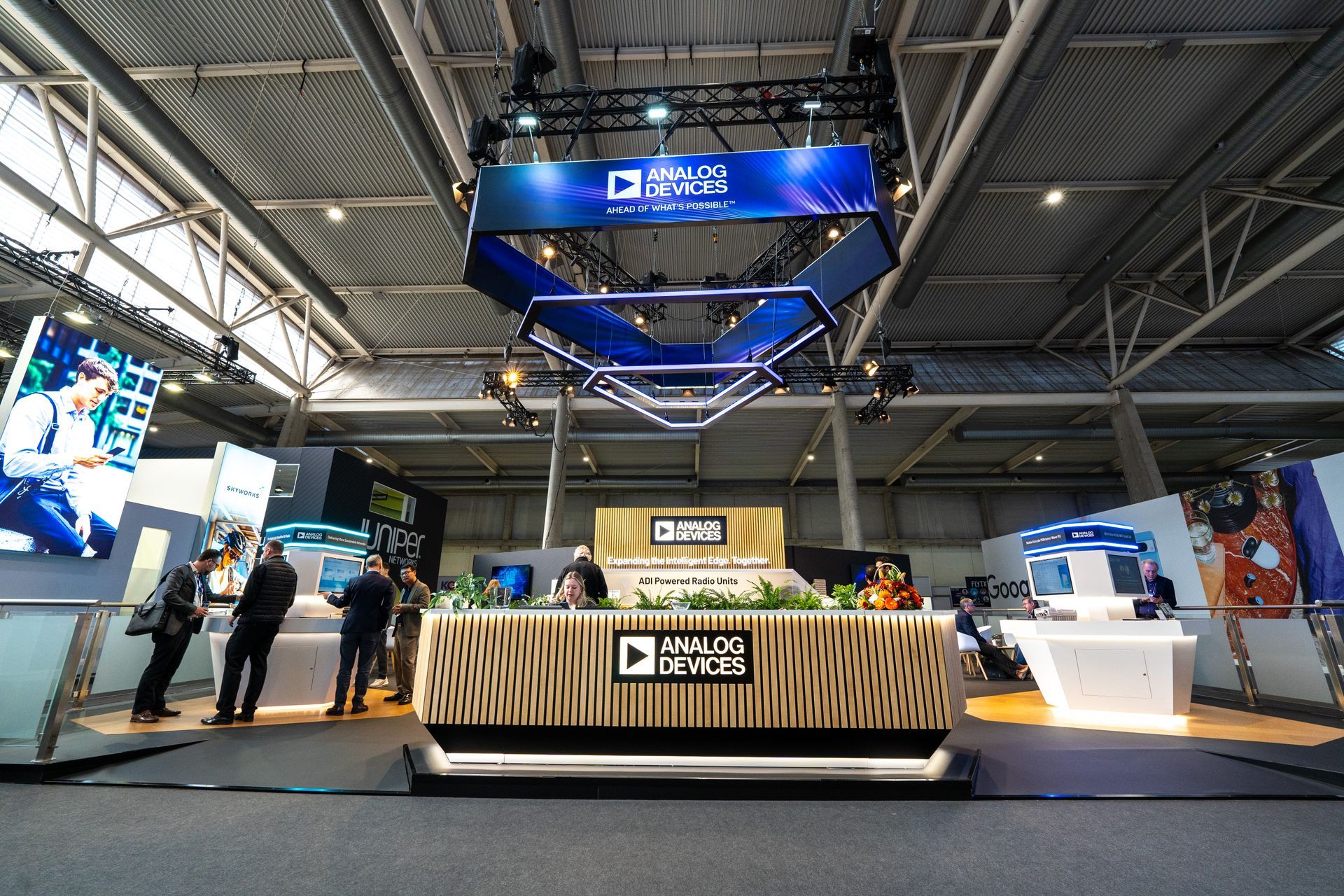
- Natural materials. Timber, stone, bamboo, cork - these bring tactile warmth that manufactured finishes cannot replicate. We use cork flooring regularly, particularly in areas where staff will be standing for extended periods: it is more comfortable underfoot than hard composite surfaces, and it can also serve as a sustainable, distinctive surface for product display areas. The choice of material is always connected to the brand. A technology company and a wellness brand will express natural materiality differently, but the effect on the feel of the space is consistent.
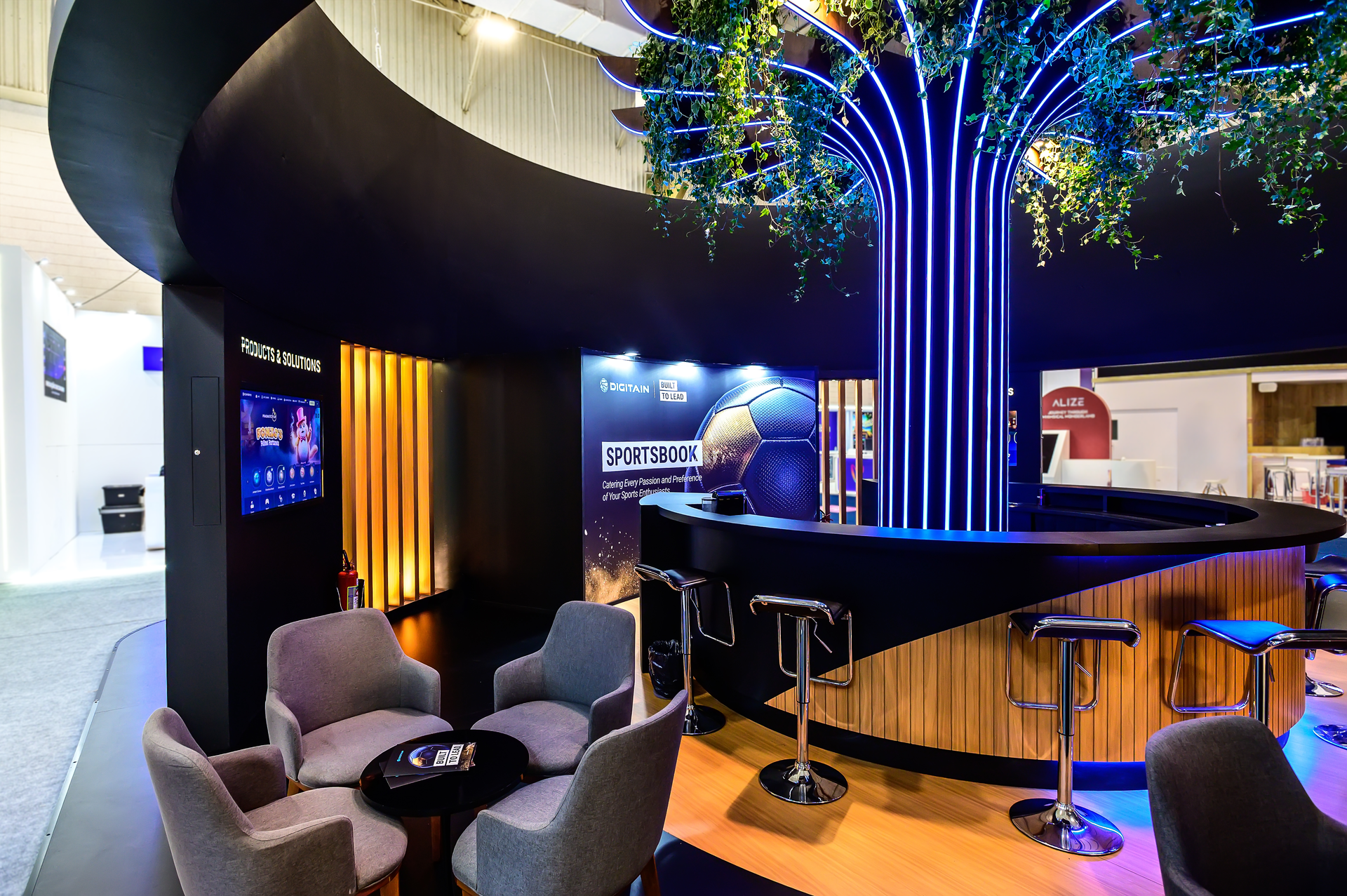
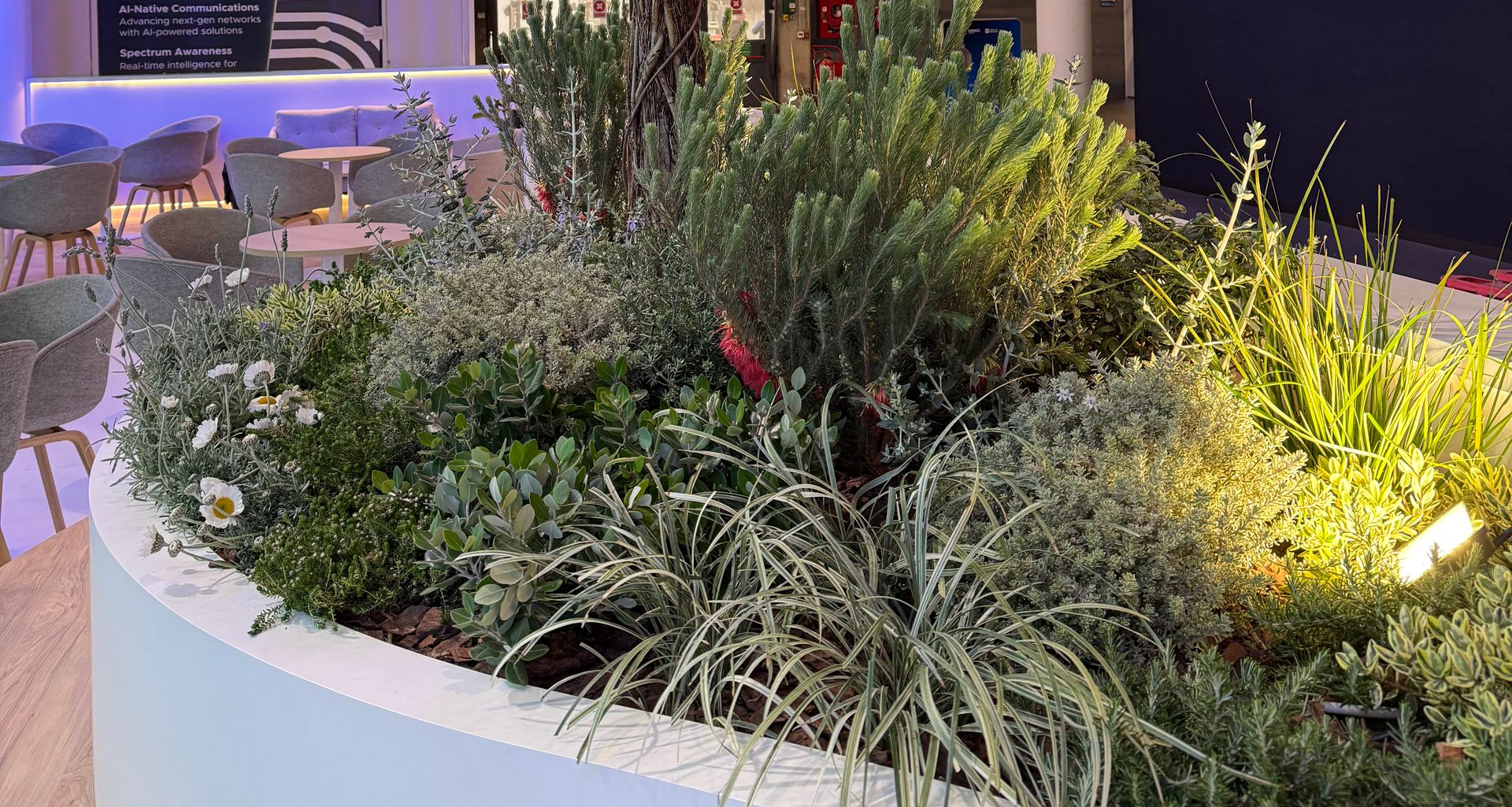
- Living planting schemes. The difference between a well-designed planting scheme and a decorative gesture is intent. When planting is conceived as part of the design, i.e. used as a privacy screen between meeting rooms, as a soft boundary between zones, as a visual anchor at the heart of an open space, it earns its place structurally and experientially. Living moss walls in particular offer excellent acoustic properties, reducing ambient sound in spaces where conversation needs to happen. Real plants improve air quality. These are functional benefits, not just aesthetic ones.
- Lighting quality. Maximising natural light is rarely possible in exhibition environments but lighting that mimics the temperature and quality of natural daylight makes a significant difference to how a space feels. The contrast between a stand lit with warm, natural-feeling light and its neighbours running standard cool white is often striking. It is one of the fastest ways to make a stand feel more human and less clinical.
- Water features. Less common, but memorable when used well. We have seen them deployed particularly effectively by Huawei at Mobile World Congress. The sound and visual movement of water provide an immediate sensory counterpoint to the noise and static brightness of the surrounding hall. A considered water feature draws visitors in and creates a focal point that has genuine dwell potential.
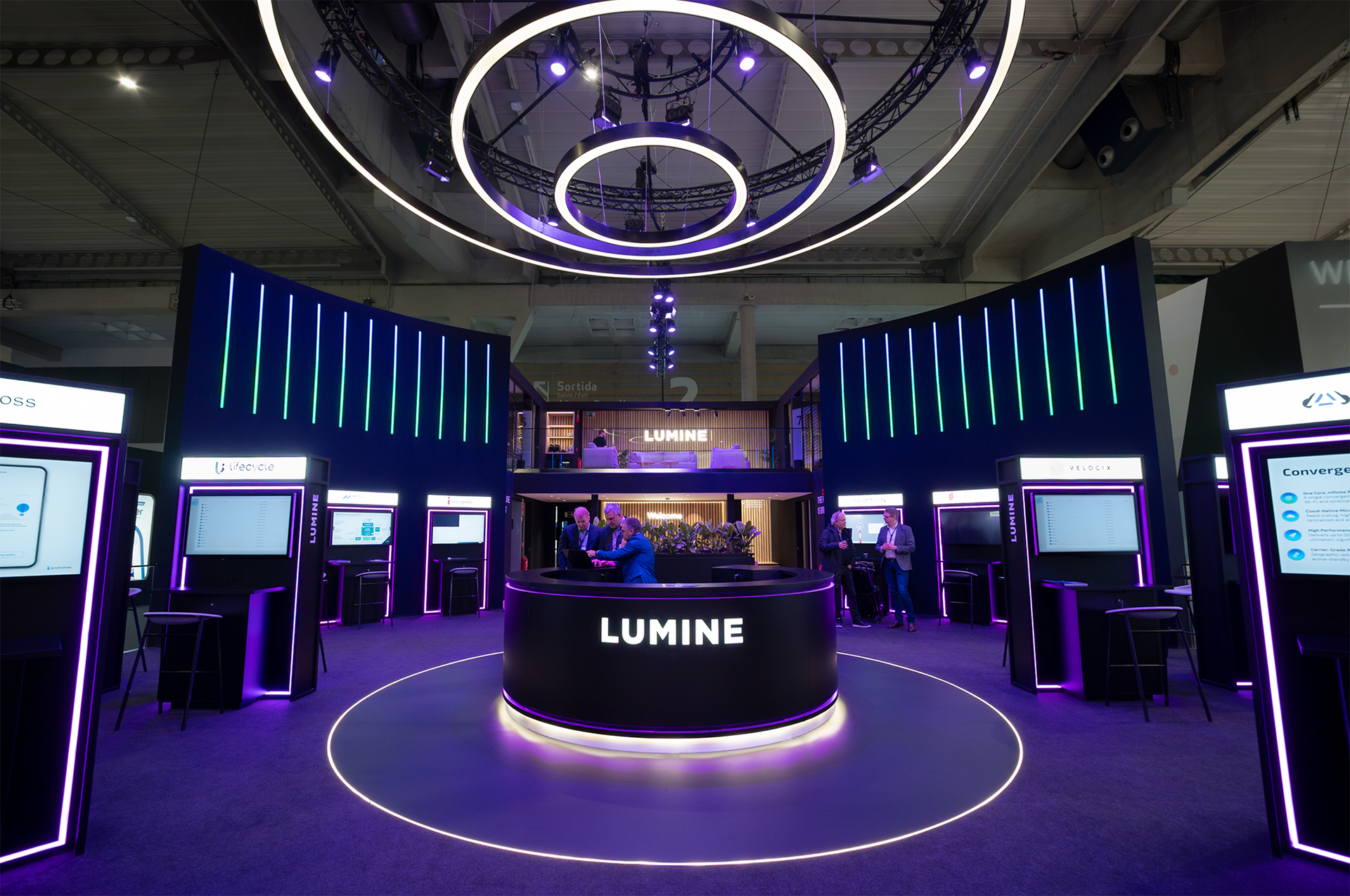
- Organic forms and patterns. Shape is a carrier of biophilic feeling even when no natural materials are present. Furniture with curved, organic forms; flooring patterns that echo natural textures; stand architecture with flowing rather than purely rectilinear lines - all of these work subliminally to create environments that feel more comfortable and less institutional. This is an area we explore in more detail in our piece on organic and geometric shapes in exhibition design.
Biophilic Design and Brand Coherence
One of the disciplines of biophilic design in exhibition stands is ensuring that natural elements are connected to the brand story, not layered on top of it.
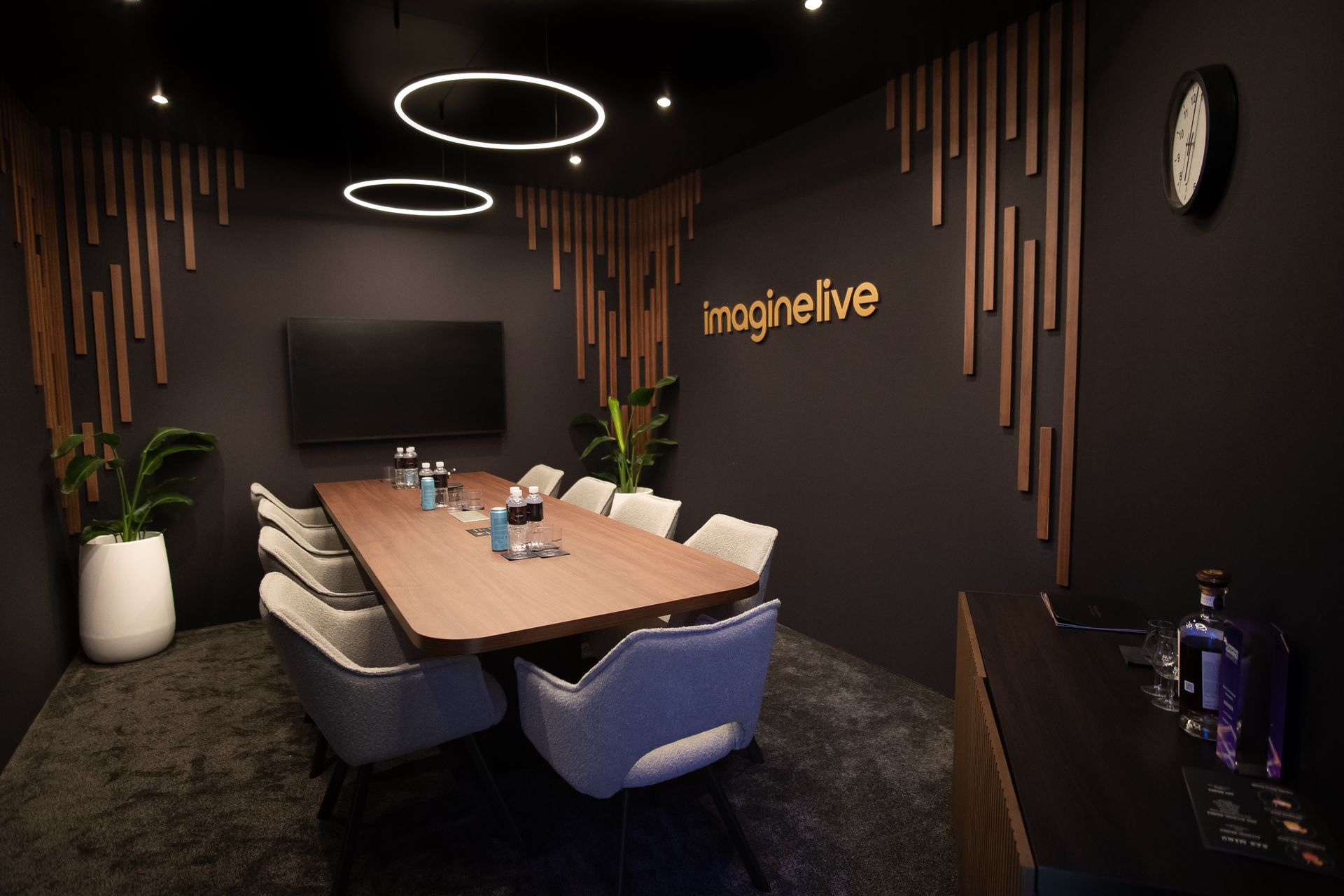
A professional business centre environment with meeting rooms, designed for structured conversations and senior client relationships, benefits from planting and natural materials that communicate calm authority. Privacy is enhanced by greenery that divides space softly rather than with walls. The overall atmosphere should feel like an elevated, welcoming, professional environment, not a show stand that has acquired some plants.
A more open, experiential stand for a consumer-facing brand might use organic forms and natural textures to create warmth and accessibility - inviting people to slow down and spend time, rather than signalling exclusivity.
The common thread is coherence. Every natural element should be explicable in terms of the brand it is serving and the experience it is creating. When it is, biophilic design in exhibition stands stops being a trend and becomes a genuine tool for building environments that people want to be in and that brands benefit from for the duration of every show.
Evolve Creative Solutions designs and builds exhibition stands and brand experiences for companies across Europe and beyond. If you'd like to talk about how natural design principles could work for your next stand, we'd love to hear from you.