Exhibition Stand Meeting Rooms: Designing B2B Meeting Spaces That Convert
Elizabeth Haworth • 19 June 2026

Designing B2B Meeting Spaces
There is a version of exhibition stand design that treats meeting rooms as an afterthought; a box at the back of the floor plan, added once the public-facing elements have been resolved. The brief says "two meeting rooms, seats for four, a screen," and so two boxes are drawn, seats are specified, a screen is noted.


This is a missed opportunity of considerable scale. In B2B exhibition like MWC or Electronica, the meeting room is frequently where the real commercial work happens. The reception, the LED signage, the product demonstration - these create the conditions for a conversation. The meeting room is where that conversation becomes a relationship, a proposal, a deal.


Designing B2B exhibition meeting spaces well is not about making them look impressive in photographs. It is about making them perform - atmospherically, practically, acoustically - in the context of what they are actually for.


Brand Consistency Goes All the Way Through

The first principle of meeting room design on an exhibition stand is one that sounds obvious but is routinely ignored: the meeting room is part of the stand.


This matters because your brand is in competition at a show in a way it rarely is elsewhere. Side by side with your nearest rivals, every element of your presence is visible and comparable. A stand that presents beautifully in the public zone and then delivers a generic meeting room with basic furniture and finishes has no meaningful connection to the design language of the rest of the space. That does communicate something about the brand. It says that the polish is surface-level. That someone ran out of either budget or intention before they got to the back.


The reverse is equally true. A meeting room that carries the same design rigour as the rest of the stand. Where the texture, materials, colour palette and spatial logic are coherent, tells visitors that the brand is consistent all the way through. It signals investment, care and professionalism. In a B2B context, where the meeting is about trust as much as product capability, this impression matters.


Details of texture and material that run through the public-facing stand should reappear in the meeting room. High-quality finish, applied consistently, elevates the whole. Consistent branding should be clear and recognisable at every touchpoint - not dominant or distracting, but present and coherent.


The Public Face and the Private Space

One of the enduring design challenges of exhibition stand meeting rooms is the tension between openness and control.

A stand should feel welcoming and inviting at the aisle level but at the same time, the meeting rooms need to function in privacy. Confidential conversations, sensitive commercial discussions and VIP briefings all require privacy. The people in the meeting room need to be able to speak freely without awareness of the show floor. The reception team needs sightlines that allow them to manage access without it feeling like security theatre.


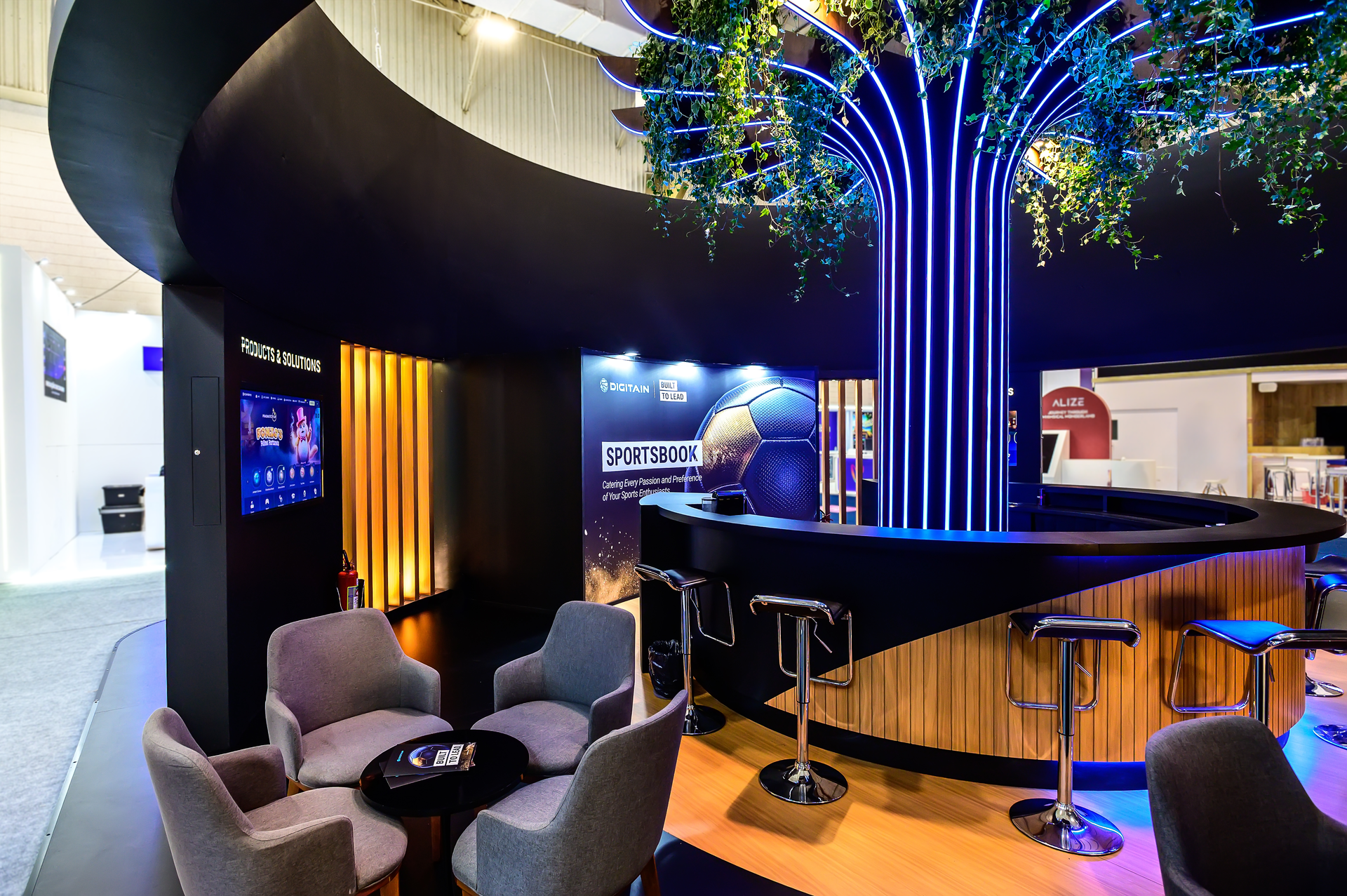
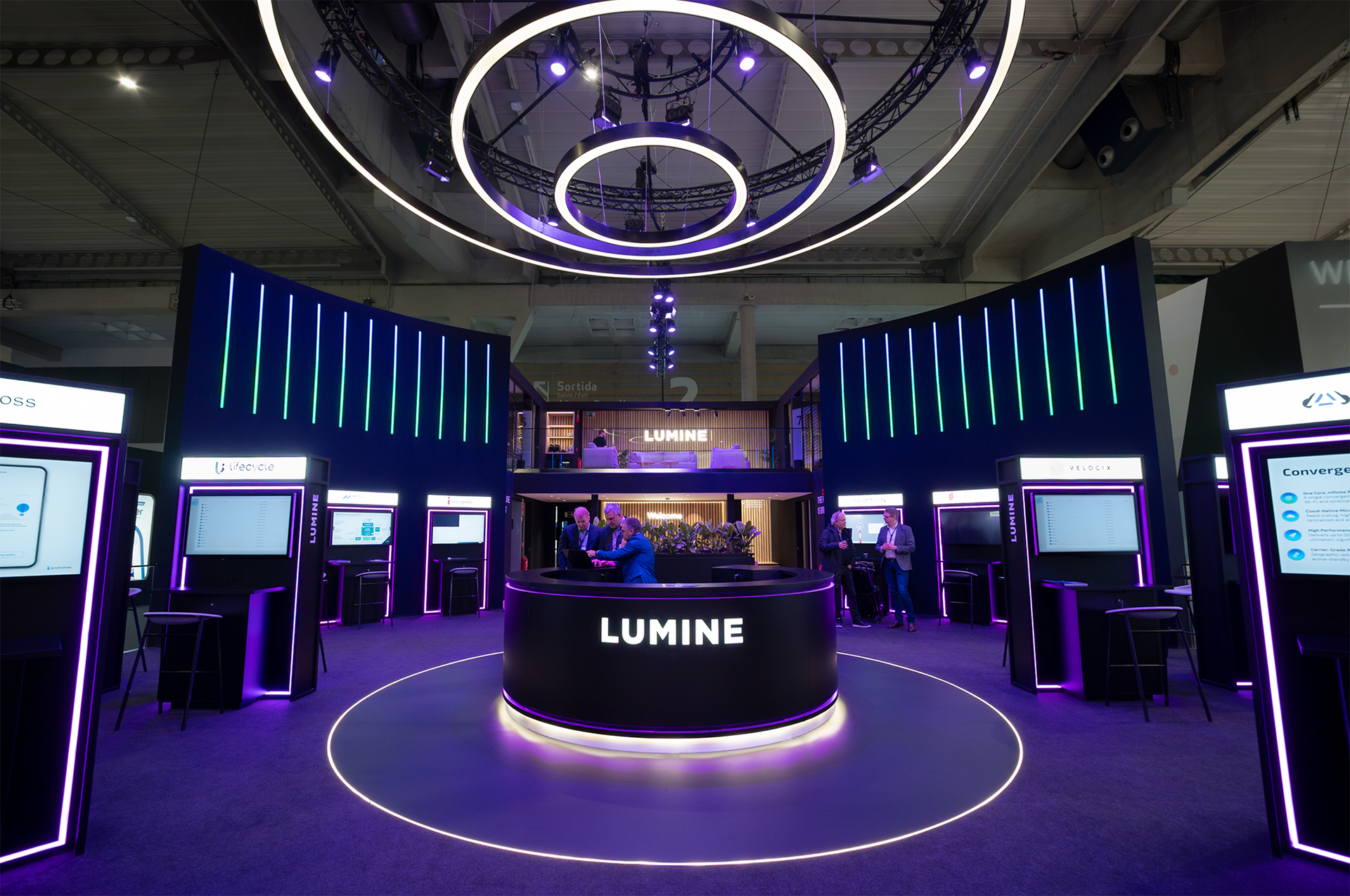
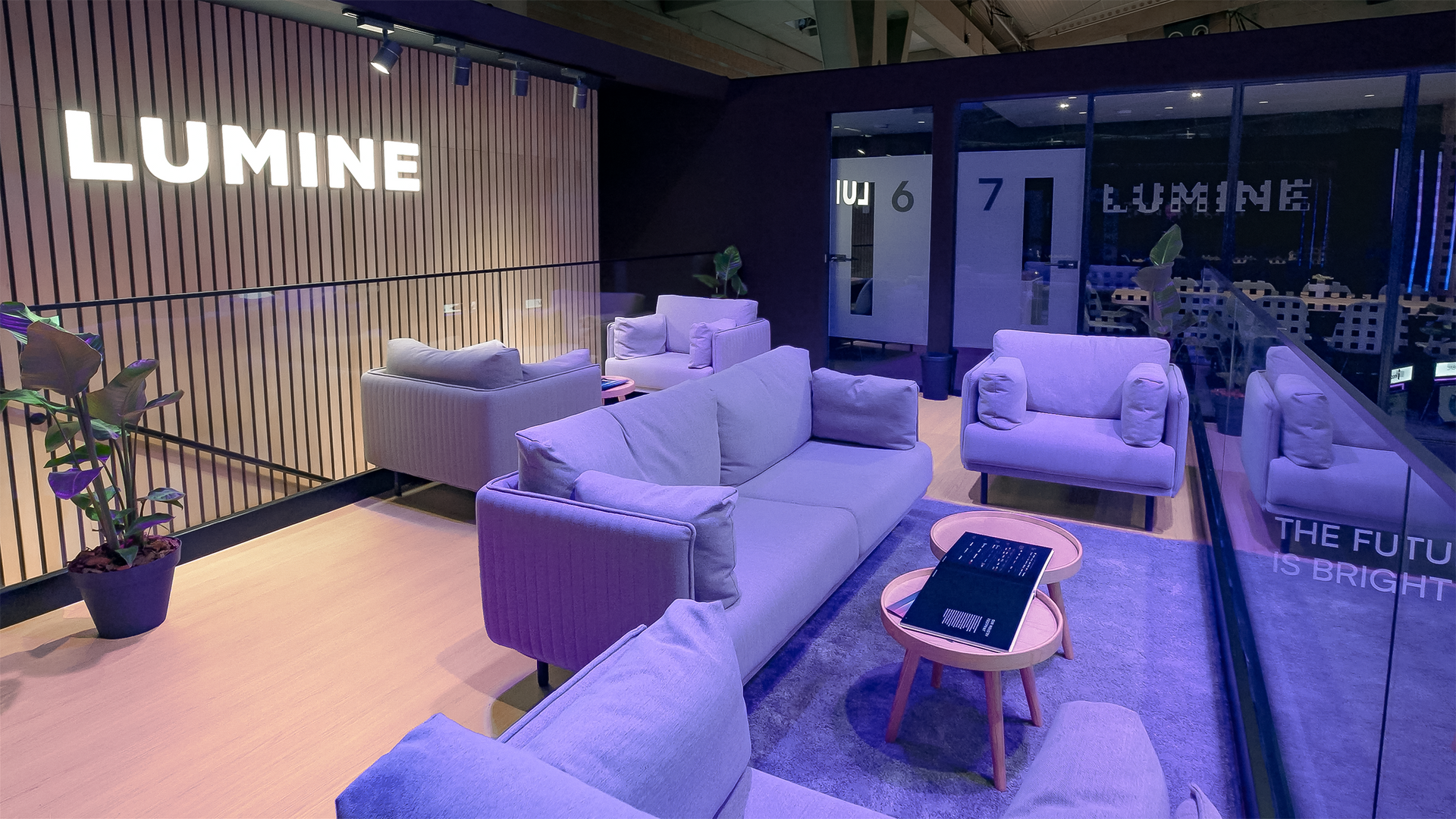
Good spatial planning can mitigate some of this through the design itself rather than through doors and barriers. Transitions between public and private zones can be signalled through changes in floor finishes, ceiling treatment, lighting temperature. The ideal is to guide visitors intuitively without requiring explicit instruction. The stand we created for Lumine at MWC 2026 featured a high impact public area at the front with black finishes and LED screens and lighting. Selected guests were invited into the executive lounge at the back which set a more inviting tone, mixing the black finishes with natural wood textures and softer furnishings. The transition was an intentional one and the distinction between the spaces was clear. Meeting rooms on two floors could be accessed from the executive lounge, with space to wait comfortably and get a coffee before a meeting began.


A well-positioned reception desk anchors this model. It provides the team with visibility across the space while signalling to visitors where the threshold of the private zone lies. The best stand floor plans make this feel effortless - open and welcoming on the outside, discreetly controlled within.


Acoustics, Comfort and the Practical Necessities

The show floor at a major B2B exhibition is one of the noisiest environments most professionals ever work in. Sustained, high-level ambient noise is the default. In this context, acoustic performance in exhibition stand meeting rooms is not a luxury, it’s a functional requirement.

Soundproofing materials and acoustic panels in the walls and ceiling of meeting rooms make conversations genuinely private rather than merely screened from view. The difference between a meeting room that someone outside cannot see into and one they cannot hear into is the difference between the appearance of privacy and the reality of it.


Comfort follows from this. Long meetings in uncomfortable chairs, in poorly lit or poorly ventilated spaces, are not productive. Ergonomic seating, adjustable lighting, and adequate air circulation are baseline requirements. Refreshments - water as a minimum, coffee where the setup allows - signal consideration for the visitor and contribute to an atmosphere in which people feel looked after rather than processed.


Technology needs are more extensive than they were even five years ago. Reliable high-speed connectivity, video conferencing capability, and presentation screens are now standard expectations. Power access for devices is essential. These requirements need to be part of the brief from the outset, not retrofitted into a space that was designed without them.


A Case Study: The Novomatic Stand at ICE, Barcelona

One of the most ambitious B2B exhibition meeting spaces Evolve has created was the double-deck business centre for Novomatic at ICE at Barcelona’s Fira Gran Via.


At the heart of the booth was a huge 590 sqm double deck structure, housing a sleek business centre with an executive suite of 25 deluxe meeting rooms, casino showroom, professional kitchen and more. The hidden gem was a 100 sqm presidential board room with a panoramic view across the show hall hidden behind a 9 x 4 metre transparent mesh LED panel. The ultimate in privacy and luxury while remaining connected to the energy of the show. 


The effect was remarkable. From inside the boardroom, the mesh LED panel functioned as a window, offering a panoramic view of the show floor, maintaining a visual and psychological connection to the energy of the event. Despite the scale of the structure many visitors are so beguiled by the dramatic content display that they barely notice the structure, never imagining the complete privacy and genuine luxury hidden away behind the screens.


This was meeting room design elevated to an architectural gesture. The boardroom didn't just support conversations - it was the ultimate expression of what the brand was capable of delivering.


Calibrating to Budget Without Compromising Principle

The Novomatic double-deck structure was a significant investment, and it is not the right reference point for every brief. But the principles it embodied apply at every scale: brand coherence from public space to private room, considered spatial planning, acoustic quality, attention to detail in finish.


A single meeting room at the back of a modest stand can still be well-designed. The materials and the finishes can still carry the brand. The lighting can still be right. The acoustic performance can still be taken seriously. The visitor experience of moving from the open stand into a private space that feels both comfortable and considered is achievable without a double-deck structure or a boardroom with a panoramic LED window.


What it requires is that the meeting room is treated as part of the design brief from the outset, not as the box that gets drawn in after everything else is resolved. In B2B exhibition, the conversation that matters most often happens in that room. It deserves to be designed accordingly.


Evolve Creative Solutions designs and builds exhibition stands and brand experiences for B2B companies across Europe. If you'd like to talk about how we approach meeting space design for your next show, we'd be glad to hear from you.

See our exhibition stand work →

6 August 2026
The exhibitor's guide: from brief to build
14 July 2026
The principles of brand-led reception design
by Elizabeth Haworth 5 June 2026
Explore how organic & geometric shapes enhance brand storytelling in exhibition stands. Contact us for innovative design solutions.
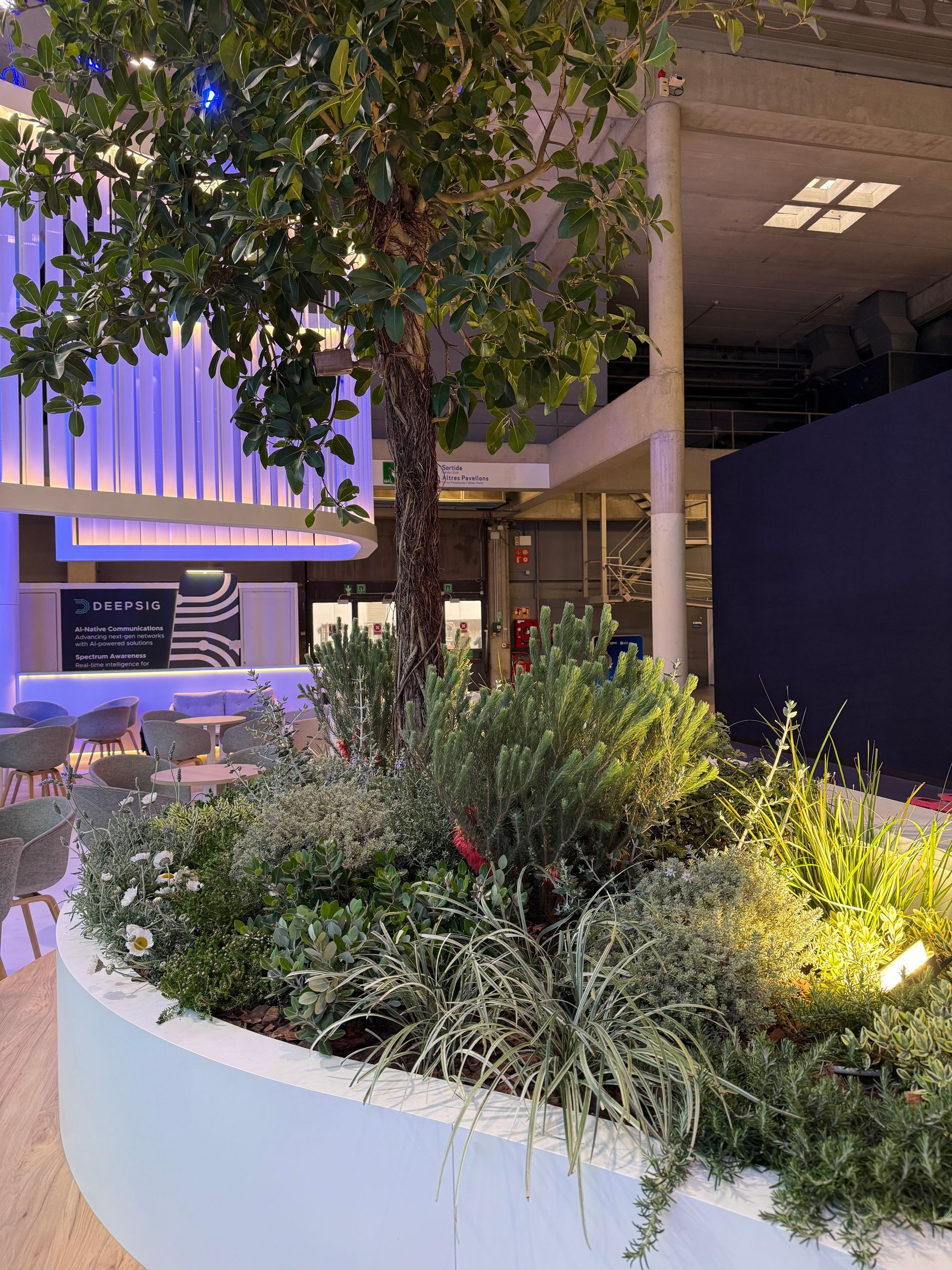
Planting on the Telenor exhibition stand at MWC Barcelona, created by Evolve
by Elizabeth Haworth 22 May 2026
Explore how biophilic design enhances exhibition stands by integrating nature for improved visitor comfort. Contact Evolve for innovative solutions.
by Elizabeth Haworth 14 May 2026
Transform audiences into advocates with immersive brand experiences. Contact us to elevate your exhibition stand design today!
by Elizabeth Haworth 12 May 2026
Evolve wins Stand Design award at Eventex Awards 2026 🏆
An independently verified signal that an agency meets rigorous standards across health and safety
by Elizabeth Haworth 8 May 2026
Learn how to choose an accredited exhibition agency for your event. Ensure safety & quality with Evolve's expert design solutions.
29 April 2026
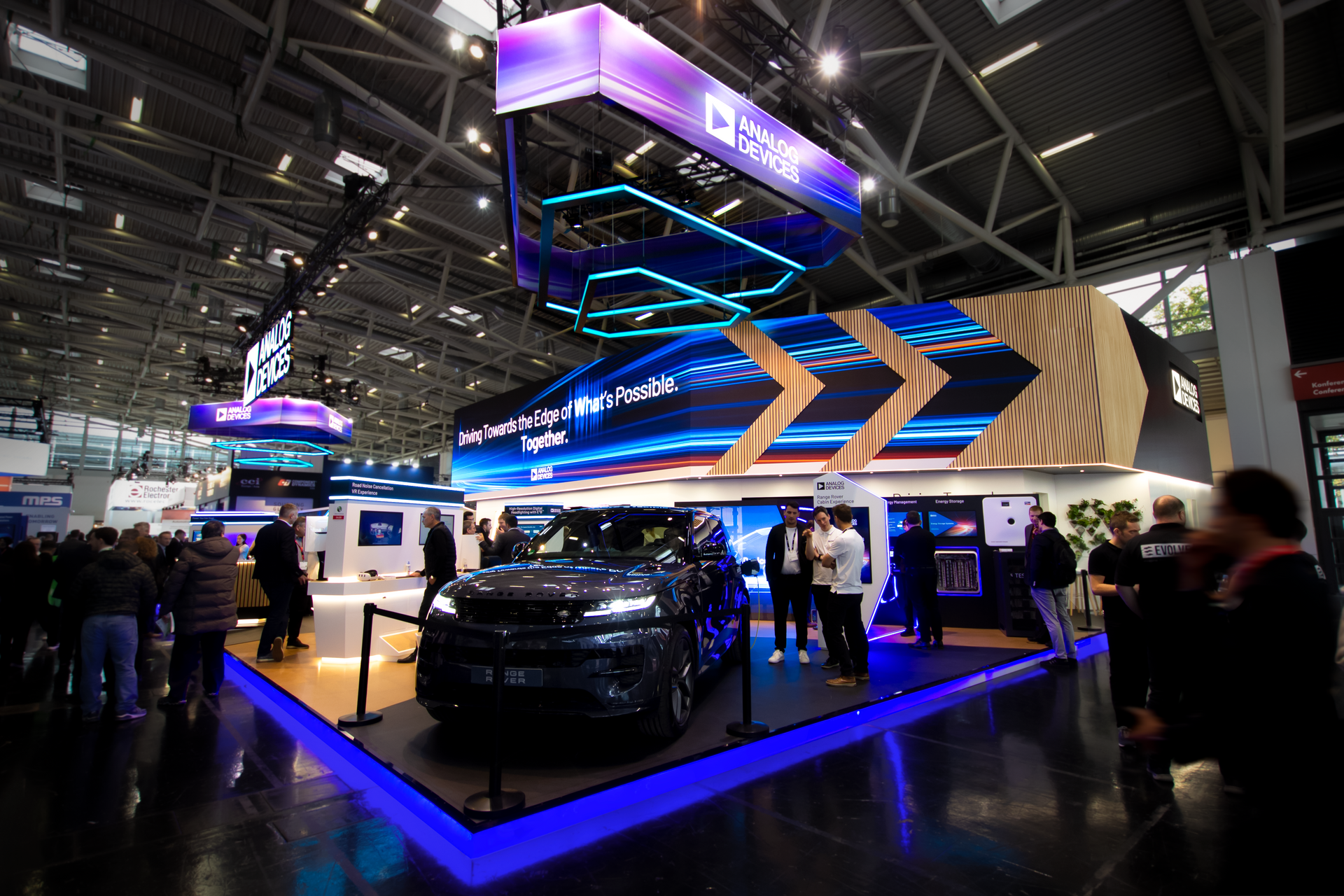
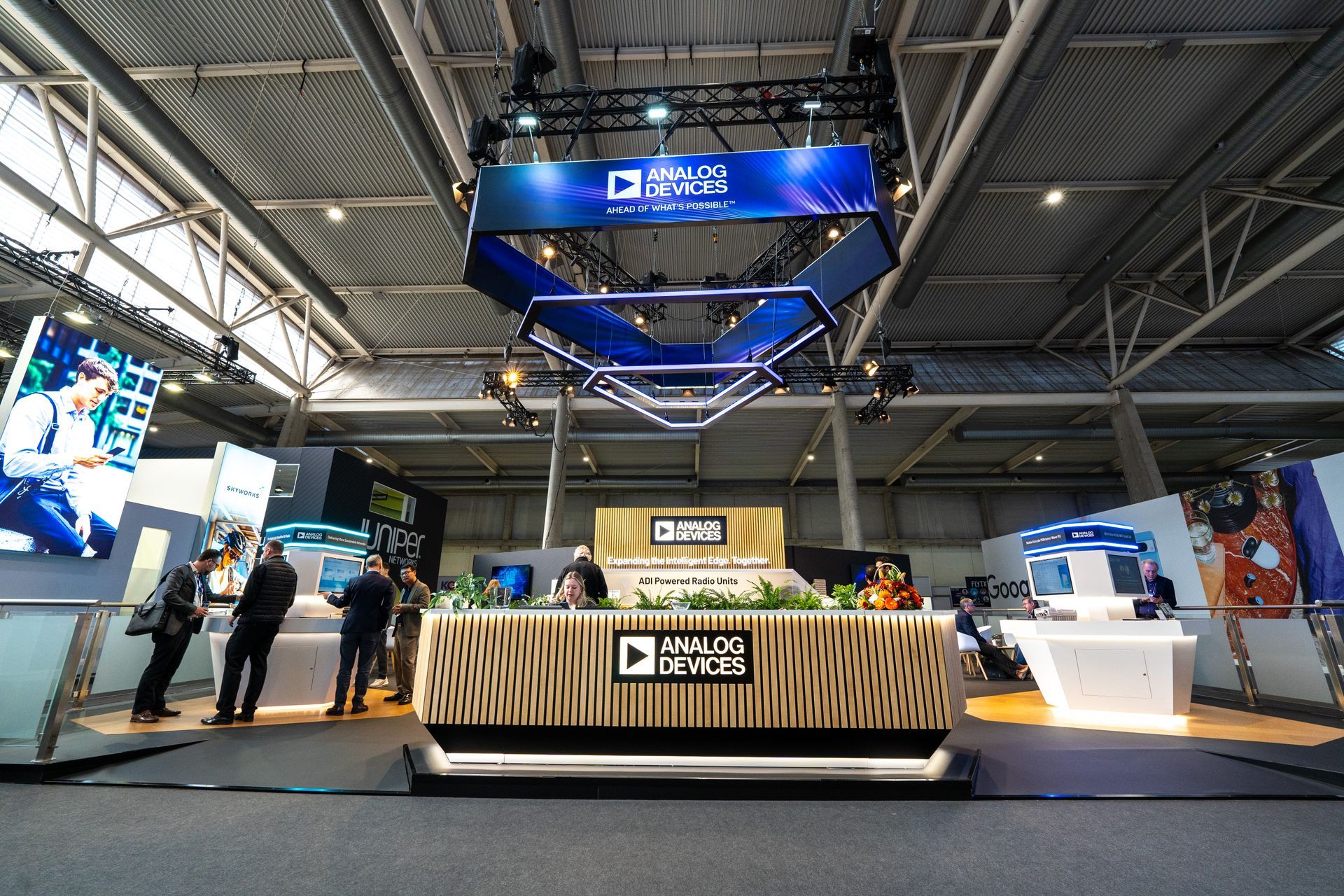
Electronica in Munich is one of the biggest dates in the tech exhibition calendar, and in 2024 we delivered what turned out to be one of the standout spaces at the show for our fantastic client, Analog Devices. We set the bar high for 2024 and with Electronica 2026 coming around fast, we're talking to our Creative Director, Richard Bartlett, about what makes a great exhibition space at a show like this. Tech show audiences are different. They're not browsing, they're evaluating. Engineers, procurement leads and product specialists who have come specifically to compare, interrogate and decide. A stand that works at a consumer show won't necessarily work at Electronica or Embedded World and understanding that difference is where good exhibition design starts. So what does work? Clarity of proposition . Visitors should understand within seconds what you do and why it matters to them. Busy show floors are unforgiving and if your messaging requires effort, most people won't bother. Functional, interactive demonstrations . At a tech show, people want to see products working, not just described. Demo zones need to be designed around the experience of using something rather than simply displaying it - intuitive, engaging, and staffed by people who know the product inside out. Space to have a real conversation . The best tech stands balance open, accessible zones with quieter areas where meaningful dialogue can happen. The demo that impresses is only useful if there's somewhere to follow it up. Practical hospitality . A coffee and somewhere to sit might sound simple, but at a long show day it matters more than you'd think. Hospitality that feels considered rather than bolted on keeps people on your stand longer and leaves a much better impression. Credibility in the details . At a tech show, the quality of your stand is part of your brand story. Poor finishes, bad lighting or a layout that feels like an afterthought sends a message you probably don't intend. Reusability built in from the start . The brands that show up consistently and confidently across multiple shows tend to think about their stand as a long-term asset rather than a one-off expense. Evolve have been delivering stands at Electronica, Embedded World and across the global tech exhibition calendar for years. If you're planning for November, now is the time to start that conversation. Have a look at some of our previous work in this sector here .
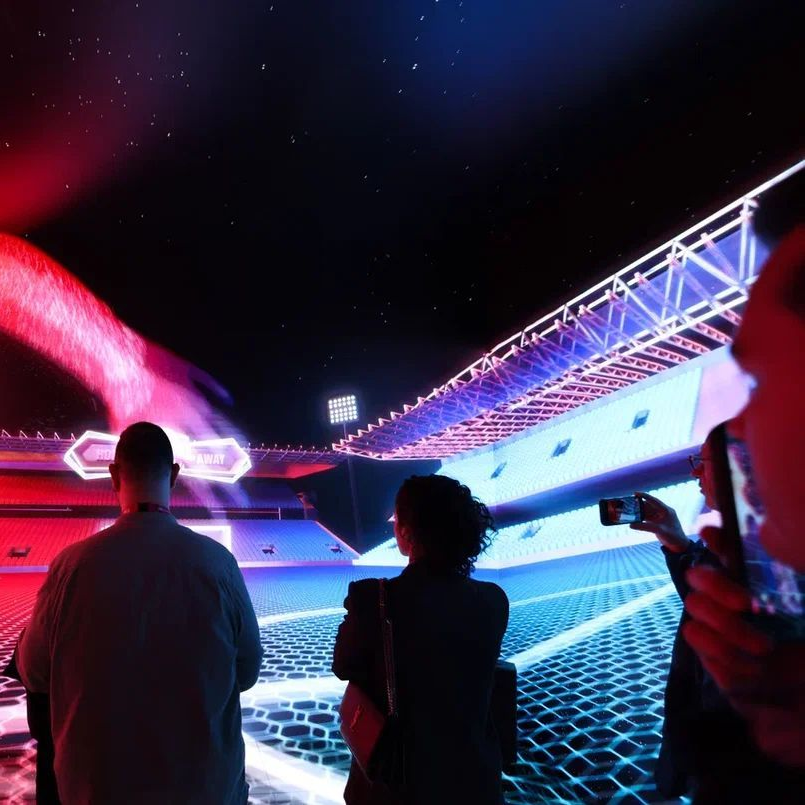
An interactive product demonstration on a booth at ICE Barcelona
13 January 2026
Explore cutting-edge interactive exhibition design tech for 2027. Enhance visitor engagement with innovative solutions. Contact us today!
30 December 2025
Exhibition Design London: Venues, Budgets & Compliance London stands as one of Europe's premier exhibition destinations, hosting hundreds of major B2B trade shows annually. From technology and gaming to manufacturing and professional services, brands from across the world converge on London's exhibition venues to connect with UK and European markets. But exhibiting successfully in London requires understanding the specific characteristics of its venues, the realistic budget implications, and the compliance requirements that shape what's possible. London's Major Exhibition Venues The ExCel Centre dominates London's exhibition landscape. Located in the Docklands area of East London, ExCel offers over 100,000 square metres of exhibition space across two interconnected halls. Its waterfront location and excellent transport links make it the preferred venue for major international shows. The space can accommodate everything from compact 50 square metre stands to expansive multi-level flagship presences exceeding 1,000 square metres. ExCel's infrastructure supports technically sophisticated builds. Substantial ceiling heights allow for impressive vertical elements and suspended features. Comprehensive power distribution, robust internet connectivity, and extensive rigging points enable the LED walls, lighting arrays, and digital systems that characterise modern high-impact stands. The venue's experienced operations team understands complex exhibition requirements and works efficiently with contractors who know the space. Venue-specific considerations at ExCel affect design and budget. Access for larger vehicles requires specific routing and timing coordination. Loading dock allocation follows strict schedules, typically allowing 36-48 hours for major stand installation. Electrical supply requires booking through venue-approved contractors at rates that can be substantially higher than standard commercial power costs. Understanding these factors during early planning prevents budget surprises. Exhibition design London projects occasionally use other venues for specialist shows. Olympia in West London hosts certain consumer and design-focused events. Alexandra Palace appeals for its historic character. But for major B2B trade shows—which represent the vast majority of serious exhibition investment—ExCel is the primary venue. Budget Realities for London Exhibitions London exhibitions carry premium costs compared to many other European cities. Understanding these budget implications helps set realistic expectations and ensures adequate resources for achieving your objectives. Stand construction costs in London reflect higher labour rates, venue charges, and the generally elevated cost of doing business in the capital. Venue charges extend beyond the basic space rental. Electricity at ExCel is metered and can represent a significant portion of total costs for stands with substantial lighting and display systems. Internet connectivity, while improving, remains surprisingly expensive. Rigging points for suspended elements carry per-point charges. Waste management fees apply. These ancillary costs can add 15-25% to the base construction budget. Labour costs for installation and dismantling reflect London's wage levels. Experienced exhibition contractors command appropriate rates for their expertise, and the skilled teams required for sophisticated builds are in high demand during busy show periods. Rush jobs or compressed schedules increase costs further as contractors need to deploy additional resources to meet tight deadlines. Transport and logistics within London add complexity and cost. Access restrictions, congestion charges, and limited loading dock availability mean materials often can't be delivered directly when ideal. Storage costs for early-arriving shipments or materials used across multiple shows affect budget planning. Design Approaches That Work in London Successful exhibition design London projects balance impact with practicality, creating stands that achieve business objectives within budget and venue constraints. Maximising vertical impact makes sense in venues like ExCel where ceiling heights allow for dramatic upward elements. Tall illuminated structures, suspended graphics, and elevated signage create visibility across the show floor, drawing attention from distance and establishing presence. This vertical emphasis often delivers better value than simply expanding the footprint. LED and mesh LED technology creates spectacular visual impact while remaining relatively efficient to transport and install. A large LED wall that might seem extravagant actually represents smart investment—it provides dynamic, changeable content, generates excellent visual attraction, and can be reused across multiple shows. The upfront costs amortise quickly across an exhibition programme. Modular design principles support sustainability and budget management. A well-designed modular system looks purposefully created for each show while actually comprising reusable components that reconfigure for different spaces. This approach particularly suits brands exhibiting regularly in London, allowing investment in quality infrastructure that serves multiple events. Strategic space allocation focuses resources where they deliver greatest impact. A 200 square metre stand that invests heavily in a spectacular entrance, high-quality meeting spaces, and excellent lighting will typically outperform a 300 square metre space with mediocre execution throughout. Understanding your primary objectives—lead generation, client hosting, product launches—ensures budget flows to the elements that matter most. Compliance and Regulations London exhibition venues operate under stringent safety and compliance requirements. Understanding and meeting these regulations is non-negotiable for successful stand builds. Electrical certification requirements are particularly rigorous at ExCel. All electrical installations require testing and certification by approved contractors before power is supplied. This includes detailed inspection of distribution boards, socket outlets, lighting systems, and any equipment connected to the supply. Installations failing inspection must be corrected before power is provided, potentially delaying stand completion. Structural engineering approval applies to multi-level builds, suspended elements, and anything requiring venue rigging points. Detailed drawings and calculations must be submitted well in advance—typically 4-6 weeks before build—to allow for review and approval. Last-minute structural elements rarely receive approval in time for installation. Fire safety regulations govern materials, exit routes, and emergency procedures. Materials must meet specified fire ratings. Exit routes need to remain clear and properly marked. Fire extinguishers and safety equipment must be positioned according to venue requirements. Exhibition stand designers familiar with London venues build these requirements into designs from the start rather than treating them as afterthoughts. Health and safety documentation includes risk assessments, method statements, and proof of contractor insurance. ExCel requires advance submission of these documents, and contractors without proper compliance can be refused venue access. Professional exhibition contractors maintain current documentation and understand exactly what each venue requires. Working with Exhibition Stand Designers in London The London exhibition industry includes contractors ranging from small specialists to international exhibition companies with comprehensive capabilities . Choosing partners appropriate for your needs affects both results and experience. Local expertise matters enormously. Exhibition contractors who regularly build at ExCel understand its peculiarities, have established relationships with venue staff, know which local suppliers are reliable, and can navigate the venue's specific procedures efficiently. This familiarity translates to smoother builds, fewer surprises, and less stress for your team. Portfolio and experience with similar projects indicate capability. A contractor who excels at consumer pop-ups might struggle with a sophisticated B2B tech stand requiring extensive AV integration and client hospitality areas. Review actual completed projects in your sector and at venues where you'll be exhibiting. Project management capabilities become critical for London shows where timing constraints are tight and multiple suppliers need coordination. The ability to manage electricians, AV specialists, graphic installers, furniture suppliers, and other contractors while adhering to strict venue schedules separates professional exhibition design companies from less capable alternatives. Communication and responsivenes s affect your experience throughout the project. Exhibition design moves through multiple decision points, from initial concepts to technical specifications to final details. Contractors who communicate proactively, respond quickly to questions, and keep you informed of progress make the entire process significantly less stressful. Planning Timeline for London Exhibitions Major London exhibitions operate on predictable schedules, and understanding typical timelines helps ensure adequate preparation. Initial planning should begin 6-9 months before show date for major exhibitions. This allows time to brief designers, review concepts, refine designs, and secure exhibition services while first-choice contractors still have availability. Waiting until 3-4 months before the show often means working with second-choice suppliers or paying premium rates for expedited work. Design development typically requires 4-8 weeks from initial brief to approved construction drawings. This includes concept development, client reviews and refinements, technical specification, and production of detailed drawings for fabrication and compliance approvals. Compressed schedules are possible but reduce time available for optimisation. Fabrication timelines vary by stand complexity. Simple builds might require 3-4 weeks from approved drawings to completed components ready for installation. Sophisticated stands with custom fabrication, complex graphics, and integrated technology need 6-8 weeks or more. Rushing fabrication compromises quality—evident in the finished stand. Venue compliance submissions require advance planning. Structural approvals at ExCel typically need submission 4-6 weeks before build. Electrical diagrams should be available for venue review at similar timeframes. Health and safety documentation is usually required 2-3 weeks before move-in. Professional contractors manage these submissions, but late design changes can compromise compliance timelines. Maximising ROI from London Exhibitions London exhibitions represent significant investment. Maximising return requires thinking beyond the stand itself to the entire exhibition programme. Pre-show marketing deserves substantial attention. With hundreds or thousands of companies exhibiting, getting existing customers and prospects to actually visit your stand requires advance promotion. Email campaigns, social media, direct outreach to key accounts—all increase footfall and opportunity. Interactive experience London elements give you compelling content for pre-show promotion. On-stand engagement strategies determine conversion rates. Having the right team, properly trained on objectives and messages, makes the difference between collecting business cards and generating qualified opportunities. Clear roles, good briefing, and appropriate staffing levels for anticipated traffic ensure you capitalise on the footfall your stand attracts. Post-show follow-up converts interest into business. Leads captured at the show have immediate value but deteriorate rapidly if not contacted promptly. Systematic follow-up processes, whether through sales teams or marketing automation, ensure exhibition investment translates to pipeline and revenue. Multi-show programmes deliver better ROI than one-off appearances. Reusable stand infrastructure, refined processes, and cumulative brand presence all improve efficiency and effectiveness over time. Thinking about London exhibitions as part of an ongoing programme rather than isolated events supports smarter investment decisions. Making London Exhibitions Work for Your Brand London offers unparalleled access to UK and European markets through world-class exhibition facilities and major international trade shows. Success requires understanding the specific characteristics of London venues, realistic budget planning, rigorous attention to compliance requirements, and working with experienced contractors who deliver reliably in this demanding environment. Whether you're exhibiting in London for the first time or refining an established presence, professional exhibition services with deep London experience ensure your investment delivers maximum impact and genuine business results. Contact us to discuss your next steps.